
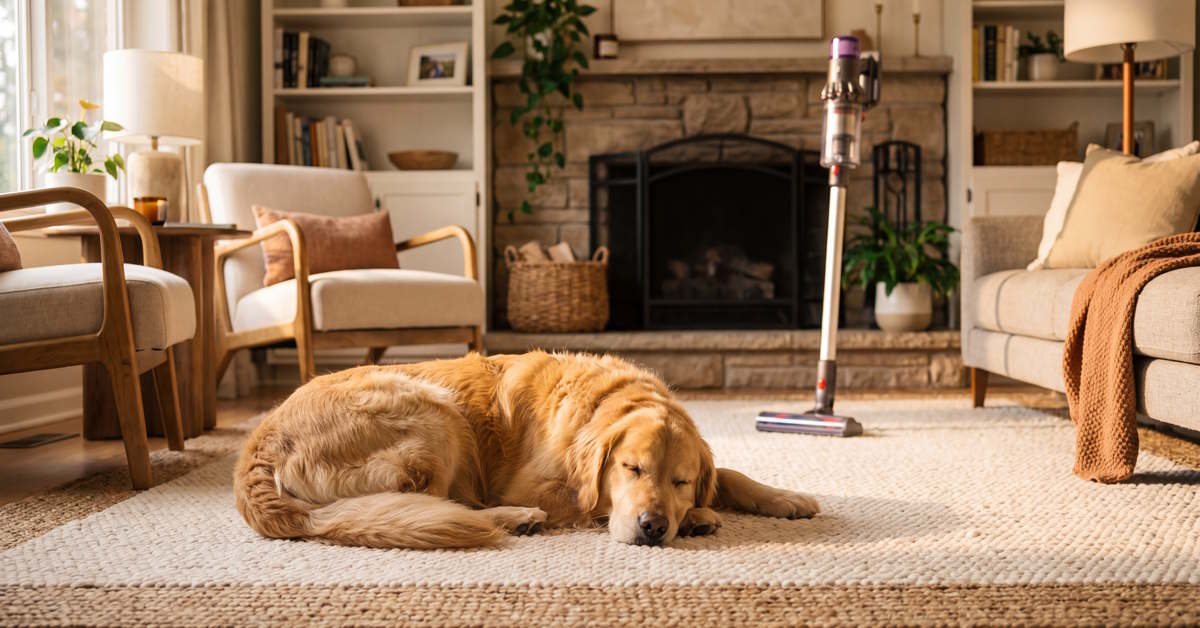
If you share your home with a furry friend, you already know the struggle. Pet hair quickly becomes embedded in carpets, rugs, and upholstery. It sticks to stairs and stubbornly clings to vehicle interiors. Ordinary vacuums often struggle to keep up. They suffer from tangled brush rolls, weak suction, and poor filtration that simply blow fine pet dander back into the air.
Finding the best vacuum for pet hair depends on several crucial factors. You must consider your main flooring type, your pet’s breed, your home’s size, and your personal cleaning habits. The good news? The best option is rarely the most expensive one on the market. Instead, it is the one that perfectly matches your household’s specific needs.
In this guide, we will explore everything you need to know to make the right choice. We will break down what makes a vacuum truly pet-friendly. Then, we will look at different vacuum types, essential features, and expert tips to keep your home beautifully fur-free.
What Makes Vacuum Good for Pet Hair?
A top-performing pet vacuum goes beyond standard suction. It features an anti-tangle brush roll to prevent hair wraps, a sealed filtration system to capture fine dander, and specialized motorized attachments to lift stubborn fur from upholstery and stairs. Together, these elements make cleaning faster and much more effective.
Strong and Consistent Suction
Powerful suction is the foundation of any good vacuum. It is especially important for removing embedded fur from deep within fabrics. Surface-level pickup might make a floor look clean at first, but deep carpet cleaning removes the hidden dirt and allergens pets leave behind. However, suction alone is not enough. Airflow and cleaning-head design matter just as much as advertised power when it comes to guiding hair seamlessly into the dustbin.
Effective Brush-Roll Design
A motorized brush roll is essential for carpets. The rotating bristles physically agitate and loosen hair from tight carpet fibers. Today, many pet-focused models offer anti-tangle or self-cleaning brush rolls. These designs slice or channel hair away before it wraps tightly around the bar. Additionally, adjustable or removable brush rolls are incredibly useful when transitioning between thick rugs and delicate hard floors.
High-Quality Filtration
Pets bring in dust, pollen, and dander. High-quality filters help capture these fine particles instead of exhausting them back into your living room. Sealed filtration systems and true HEPA filters are the gold standard here. They ensure that all air passes through the filter before exiting. Naturally, you must wash or replace these filters regularly to maintain peak suction power.
Pet-Specific Attachments
The right tools make a massive difference. Motorized upholstery tools act like mini vacuums for your sofas and pet beds. Crevice tools easily reach into tight corners and gaps in furniture where hair tends to gather. Soft brushes gently dust delicate surfaces like lampshades and blinds. Finally, flexible hose attachments provide the extra reach needed for cleaning stairs and vehicle interiors effectively.
Types of Vacuums for Pet Hair
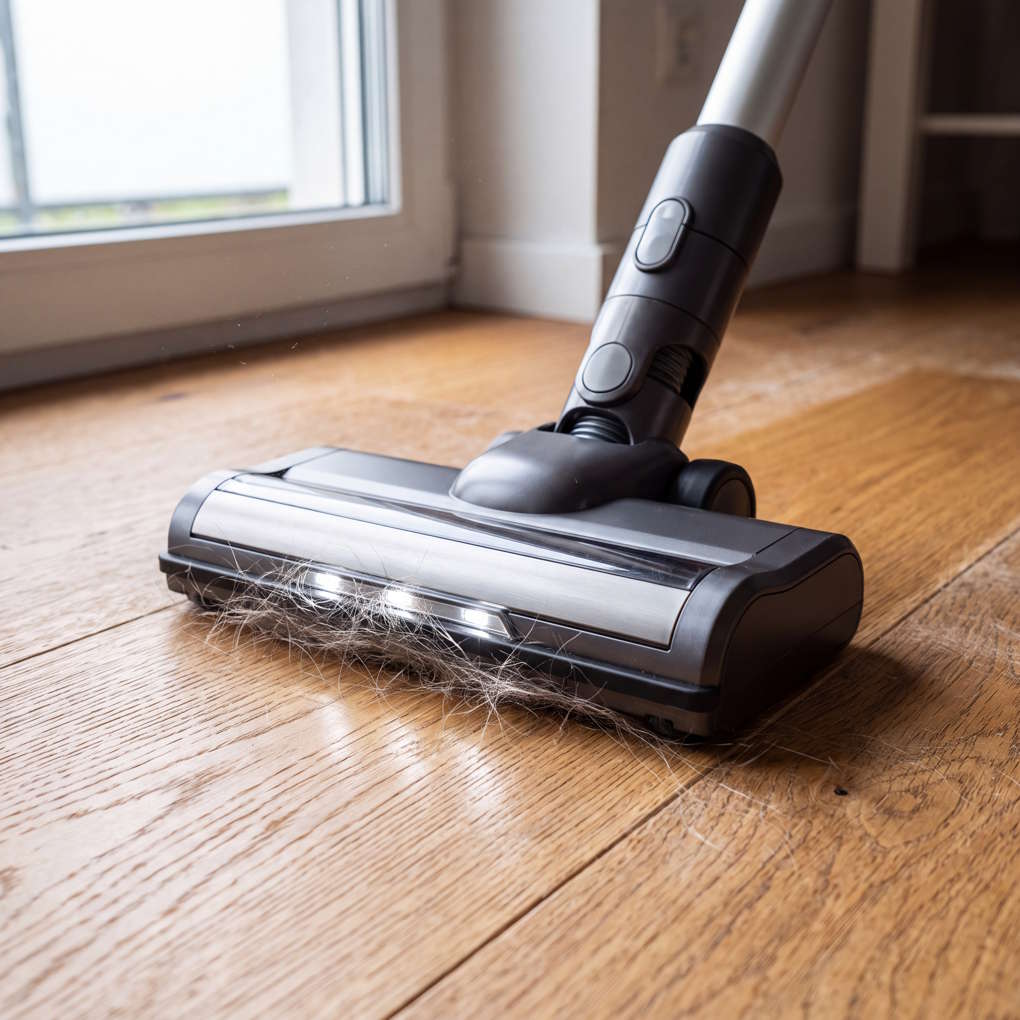
The best vacuum for pet hair often depends on the specific style of cleaner you prefer. Each type offers distinct advantages for different home layouts.
Upright Vacuums
Upright vacuums are best suited to large, heavily carpeted areas. They typically provide incredibly strong suction and feature wide cleaning paths. This allows you to cover large rooms quickly. On the downside, they tend to be heavier. This bulk can make them harder to maneuver on stairs or around tight furniture.
Canister Vacuums
Canister vacuums separate the motor from the cleaning head. This design offers excellent maneuverability and flexible cleaning attachments. They are highly suitable for mixed flooring, delicate furniture, and hard-to-reach areas. However, you will need a bit more storage space for the bulky canister and the long hose.
Cordless Stick Vacuums
Cordless stick vacuums have revolutionized daily cleaning. They are lightweight, highly portable, and extremely convenient for quick pet-hair cleanup. They are particularly useful for tackling stairs, furniture, and fast spot-cleaning sessions. However, you must keep an eye on battery runtime, and their smaller dustbin capacity may require frequent emptying.
Robot Vacuums
Robot vacuums are fantastic for controlling daily hair buildup. They are best used for scheduled, automated maintenance between your deeper cleaning sessions. While they save a lot of time, they are not perfect. They may struggle with thick rugs, tight corners, and heavily embedded fur on furniture.
Handheld Vacuums
Handheld vacuums are ideal for small, targeted messes. They are perfect for sofas, pet beds, car seats, and spilled kibble. They are easy to store and use on a moment’s notice. Still, they are not suitable as the primary vacuum in a large home due to their limited size and power.
Wet-Dry Vacuums
Wet-dry vacuums are utility workhorses. They are useful for households dealing with a mix of fur, dirt, muddy paws, and occasional liquid messes. However, they are generally more appropriate for garages and utility spaces. They lack the gentle touch needed for delicate carpets or upholstery unless they are specifically designed for indoor pet messes.
Choosing the Best Vacuum for Pet Hair by Cleaning Need
Not every pet home requires the exact same machine. Finding the best vacuum for pet hair means matching the tool to the specific mess.
Best Overall Vacuum for Pet Hair
The ideal all-around pet vacuum strikes a perfect balance. It combines strong, consistent suction with a reliable anti-tangle brush roll. It must feature sealed filtration to trap odors and dander. Furthermore, it should include useful, motorized attachments and offer simple, convenient maintenance for busy pet owners.
Best Vacuum for Dog Hair
Dogs often leave behind coarse, long, or heavy fur. Vacuums designed for dog hair need larger dustbins to hold bulky debris. They also require highly durable brush rolls that can withstand thick tangles. These models must be easy to deploy for frequent cleaning around dog beds and muddy entryways.
Best Vacuum for Cat Hair
Cat hair presents a different challenge. It is fine, static-prone, and easily sticks to fabrics while gathering under low furniture. The best models for cat hair feature strong upholstery tools and low-profile cleaning heads. Excellent filtration is also critical to capture fine clay litter dust and microscopic cat dander.
Best Vacuum for Carpets and Pet Hair
Carpets easily trap and hide fur. Therefore, cleaning them requires a powered brush roll and adjustable height settings. This ensures deep cleaning for both medium- and high-pile carpets. Because long strands easily wrap around traditional rollers, an active anti-tangle mechanism is highly recommended for carpet-heavy homes.
Best Vacuum for Hardwood Floors and Pet Hair
Hard floors demand a gentler approach. The best models use soft, fluffy rollers or feature a brush-roll shutoff switch. Strong airflow is vital here, as it helps collect loose hair scattered along baseboards and edges. Beware of stiff, fast-spinning brushes, as they can easily scatter debris or mark delicate wood flooring.
Best Vacuum for Furniture and Stairs
Cleaning vertical spaces and soft furnishings requires agility. Look for lightweight designs equipped with motorized mini tools. A generous hose length is important for reach. Additionally, uprights or sticks that easily convert into a portable handheld unit make cleaning stairs significantly safer and easier.
Important Features to Consider Before Buying
When evaluating your options, look closely at the specifications. The right features can turn a frustrating chore into a quick, simple task.
Corded Versus Cordless
Corded models provide continuous, reliable power for long cleaning sessions. On the other hand, cordless models offer unbeatable convenience and portability. Consider your routine. If you need a vacuum for whole-home deep cleaning, corded is usually best. For quick, daily maintenance, cordless wins.
Bagged Versus Bagless
Bagged vacuums securely seal away dirt. This can significantly reduce your contact with dust and hair during disposal, which is great for allergy sufferers. Bagless models, however, eliminate the recurring cost of replacement bags. If you choose bagless, carefully compare capacity, maintenance needs, and the ease of emptying the bin.
Dustbin or Bag Capacity
Larger capacities are incredibly useful for households with multiple pets. Hair takes up a lot of physical space very quickly. Small dustbins may need to be emptied several times during just one cleaning session, which slows you down.
Battery Runtime
For cordless models, runtime is critical. Keep in mind that maximum advertised runtimes are usually based on the lowest power settings. Using motorized attachments and high-suction boost modes will significantly reduce your actual operating time.
Noise Level
Pets possess highly sensitive hearing. Quieter vacuums may be vastly preferable for pets that become anxious around loud, sudden sounds. Regardless of the volume, always introduce a new vacuum gradually. Never force a frightened pet to sit near it.
Weight and Maneuverability
Consider the physical layout of your home. You must factor in stairs, tight spaces, and your own physical comfort. Features like swivel steering and low-profile cleaning heads can drastically improve the machine’s overall usability.
Maintenance Requirements
A pet vacuum requires upkeep to stay effective. Check how easily hair can be removed from the brush roll when it gets tangled. Consider the processes for filter cleaning and belt replacement, and where you will store the attachments. Finally, look into the long-term availability and cost of replacement parts.
How to Choose the Right Vacuum for Your Home
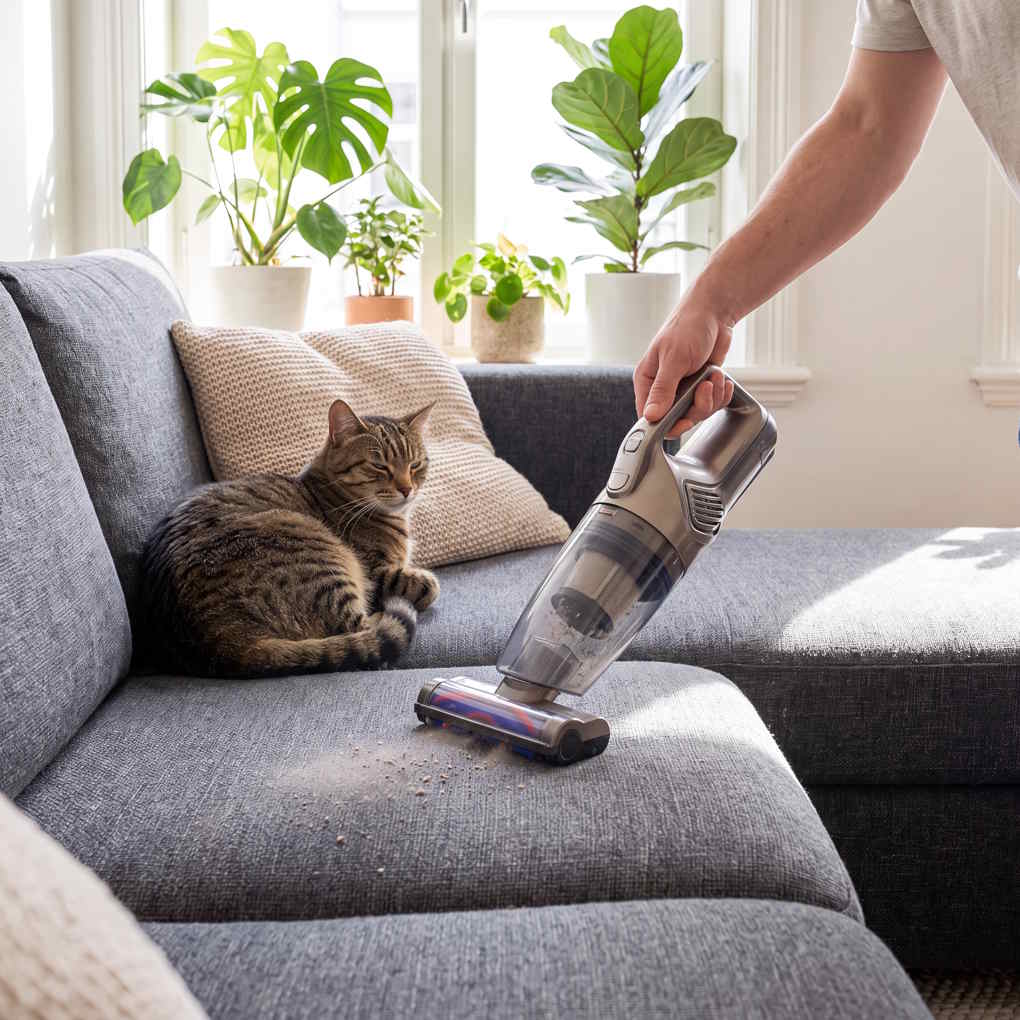
Follow this simple decision-making process to find your perfect match. First, identify your home’s main flooring type. Next, consider how much and how often your specific pet sheds. Decide whether the vacuum will be used mostly for weekly deep cleaning, daily maintenance, or both.
Check whether your stairs, upholstery, vehicles, or pet beds require special, motorized attachments. Compare your available storage space against the vacuum’s weight and footprint. Set a realistic budget that includes ongoing costs such as replacement filters, bags, and, eventually, batteries. Finally, review warranty coverage.
For example, a fully carpeted home with two large dogs may greatly benefit from a powerful, corded upright. Meanwhile, a small hard-floor apartment with one cat may be better served by a nimble cordless stick vacuum. A robot vacuum can support daily cleaning in both, but it rarely entirely replaces a traditional vacuum.
How to Vacuum Pet Hair More Effectively
To get the best results, vacuum your high-traffic areas more frequently. Use slow, overlapping passes instead of moving the vacuum quickly back and forth. Clean your carpets in multiple directions to thoroughly loosen deeply embedded hair.
Always use a motorized attachment on sofas and pet beds for the best lift. Move your furniture periodically to reach hidden hair that floats into dark corners. Empty the dustbin before it becomes completely full to maintain maximum airflow. Remove wrapped hair from brush rolls and wheels immediately.
Wash or replace your filters exactly according to the manufacturer’s instructions. Beyond vacuuming, groom your pets regularly outside to reduce loose hair inside the home. Use washable furniture covers and pet-bed liners where practical to catch hair before it hits the fabric.
Common Mistakes When Buying a Pet Hair Vacuum
Choosing based on suction claims alone is a common trap. Cleaning-head design, steady airflow, and brush performance matter just as much as raw power. Ignoring your main flooring type is another error; a vacuum designed purely for thick carpet may actually damage delicate hard floors.
Overlooking brush-roll maintenance will quickly ruin performance. Even a powerful vacuum loses effectiveness when the roller is heavily choked with hair. Buying a vacuum with a tiny dustbin for a heavy-shedding household means frequent, frustrating trips to the trash can.
Assuming a robot vacuum can handle everything is unrealistic. They are valuable for floor maintenance but cannot tackle furniture, stairs, or thick carpets. Finally, overlooking long-term costs such as replacement bags, HEPA filters, and fresh batteries can significantly increase your total cost of ownership.
Frequently Asked Questions About Pet Hair Vacuums
What Is the Best Type of Vacuum for Pet Hair?
The best type depends entirely on your home layout. Upright vacuums work incredibly well for large, carpeted spaces. Cordless stick models offer unmatched convenience for quick daily pickups. Canister vacuums provide excellent versatility for mixed flooring and delicate above-floor cleaning.
Are Pet Vacuums Different from Regular Vacuums?
Yes, they are designed differently. True pet vacuums feature active anti-tangle brush rolls, stronger motorized upholstery tools, and fully sealed filtration. These specific additions allow them to handle heavy shedding and fine dander much better than standard vacuums.
Is A Cordless Vacuum Powerful Enough for Pet Hair?
Modern cordless models are very powerful and easily suitable for daily pet-hair cleaning. However, you must carefully balance their strong suction against their limited battery runtime and smaller dustbin capacities, especially in large homes.
Do Robot Vacuums Work Well for Pet Hair?
Robot vacuums are excellent for reducing daily surface buildup, especially on hard floors. However, they still require regular brush maintenance. Most homes will still need occasional deep cleaning of carpets and upholstery with a traditional vacuum.
Is HEPA Filter Necessary For Pet Owners?
A HEPA filter is highly recommended, especially in homes where occupants are sensitive to dust, pollen, or pet danger. Make sure the vacuum also features a sealed system; otherwise, dirty air will leak out before it even reaches the filter.
How Often Should Pet Owners Vacuum?
Frequency depends entirely on your pet’s shedding level and your household size. High-traffic areas may need daily or every-other-day maintenance. Meanwhile, you can typically clean the entire home more thoroughly once a week.
How Do You Stop Pet Hair from Wrapping Around the Brush Roll?
The best prevention is to choose a vacuum specifically equipped with an anti-tangle or self-cleaning design. For standard models, you must manually cut and remove accumulated hair regularly. Never allow the roller to become completely covered.
Choosing the Best Vacuum for Pet Hair
Ultimately, the best vacuum for pet hair depends on your unique mix of flooring, pet type, shedding level, and daily cleaning routine. To make the best investment, always prioritize strong suction, intelligent brush-roll performance, high-quality filtration, and ease of maintenance.
Upright and canister vacuums remain strong choices for deep, whole-home cleaning, while cordless and robot vacuums excel at frequent, convenient maintenance. Compare practical, everyday features rather than choosing based solely on brand recognition or flashy advertised power.
By selecting a well-matched machine, you can drastically reduce your cleaning time. More importantly, you will keep your floors, furniture, and pet areas cleaner, fresher, and much more manageable day in and day out.