

Nothing beats the rush of diving into open water. Whether you enjoy surfing coastal waves, kayaking across calm lakes, or exploring deep reefs, being in the water brings a sense of pure freedom. However, chilling water can quickly turn a fun adventure into an uncomfortable experience. That is why choosing between a wetsuit and a drysuit is one of the most important decisions for any water enthusiast.
Selecting the right protective garment directly affects your comfort, warmth, safety, and overall performance in the water. Wetsuits and drysuits both protect you from exposure, but they operate on completely different principles. In basic terms, wetsuits allow a thin layer of water to enter the suit, whereas drysuits are designed to keep water out entirely.
Understanding this fundamental distinction helps you pick the right gear for your favorite sport. From scuba diving and surfing to paddleboarding, kayaking, and open-water swimming, each activity has unique demands. In this guide, we will break down the insulation, functionality, mobility, cost, and maintenance to help you make the best choice.
What Is a Wetsuit?
A wetsuit is a flexible, skin-tight exposure suit designed to keep you warm in cool-to-cold water. It does not try to keep you dry. Instead, it embraces water as part of its warming mechanism while offering physical protection against scrapes, sun exposure, and stings.
The core secret of a wetsuit is synthetic rubber called neoprene. Neoprene contains millions of tiny microscopic nitrogen gas bubbles trapped inside the material. These bubbles act as a barrier against cold water, slowing down heat loss from your body.
When you enter the water, a tiny amount of water trickles into the suit. A properly fitted wetsuit traps this thin layer of water against your skin. Your body heat quickly warms this water up, creating a cozy microclimate. Wetsuits come in various thicknesses, typically measured in millimeters:
- 2mm–3mm: Ideal for warm to mild water (68°F / 20°C and above).
- 5mm: Great for moderate water temperatures (55°F–65°F / 13°C–18°C).
- 7mm: Built for cold water conditions (45°F–55°F / 7°C–13°C).
Activities like surfing, snorkeling, triathlons, bodyboarding, and warm-water scuba diving rely heavily on wetsuits for flexibility and ease of use.
How Does a Wetsuit Work?
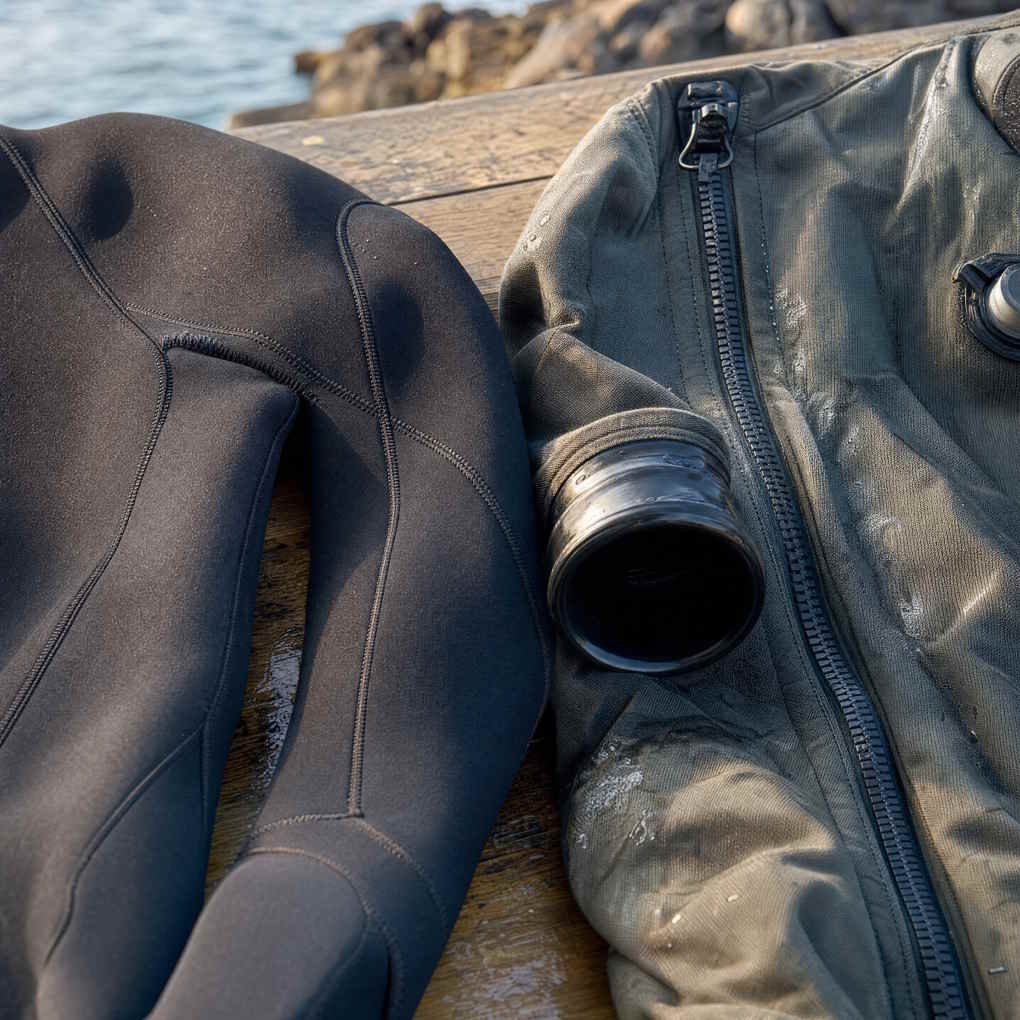
Neoprene insulation works because air and gas conduct heat much slower than water. The trapped nitrogen bubbles reduce thermal transfer between your warm body and the cold sea.
A snug fit is essential for this system to work. If your suit is too loose, cold ocean water continuously flows in and out—an effect called ‘flushing.’ Constant flushing washes away the water heated by your body, leaving you shivering.
Keep in mind that deep diving compresses neoprene due to ambient water pressure. As you descend, the tiny gas bubbles squeeze tightly together. Consequently, a wetsuit loses some of its thickness and thermal insulation at greater diving depths.
Different Types of Wetsuits
- Full-Body Wetsuits (Fullsuits): Cover your entire torso, arms, and legs down to the ankles for maximum warmth and coverage.
- Shorty Wetsuits: Feature short sleeves and legs that end above the knee, perfect for warm weather and mild water temperatures.
- Spring Suits: Offer short legs combined with long sleeves, protecting your upper body while keeping legs free.
- Wetsuit Tops and Bottoms: Separate neoprene jackets, vests, or pants that you can mix and match for lightweight protection.
What Is a Drysuit?
A drysuit is a fully waterproof outer shell designed to keep water completely out of your body. Unlike a wetsuit, a drysuit offers absolute barrier protection, allowing you to stay completely dry beneath the water even during prolonged immersion.
Drysuits feature heavy-duty waterproof shells made from materials like vulcanized rubber, crushed neoprene, or durable trilaminate fabrics. They utilize watertight zippers, taped seams, and tight seals around the neck and wrists made of latex, silicone, or neoprene.
Because the suit shell itself provides little to no warmth, your insulation comes from thermal undergarments worn underneath. You can adjust these base layers based on how cold the water is.
Drysuits are essential gear for cold-water scuba diving, extreme kayaking, cold-weather sailing, search-and-rescue operations, and technical diving in freezing conditions.
How Does a Drysuit Work?
Under normal operation, airtight seals prevent water from penetrating the interior. This complete seal separates the job of staying dry from the job of staying warm. Your undergarment traps warm air next to your body.
Because air squeezes together under pressure, diving drysuits feature inflation and exhaust valves connected to your air tank. As you descend underwater, you inject small bursts of air into the suit to prevent painful ‘suit squeeze.’ As you ascend, you vent air through the exhaust valve to maintain smooth buoyancy control.
Different Types of Drysuits
- Membrane or Trilaminate Drysuits: Lightweight, non-stretchy, waterproof shells made of laminated synthetic materials. They offer zero thermal protection on their own, relying entirely on warm undergarments.
- Neoprene Drysuits: Built from high-density or crushed neoprene. They offer built-in thermal insulation and stretch, requiring thinner base layers.
- Surface-Water Drysuits: Designed for boating, kayaking, and sailing. They lack inflation valves since users remain on the water surface.
- Diving Drysuits: Equipped with dedicated inflation and exhaust valve systems specifically for underwater pressure management.
Wetsuit vs Drysuit: Key Differences Explained
Comparing the wetsuit and drysuit directly helps highlight which design best fits your specific aquatic adventures.
| Water Protection | Allows a thin layer of water inside | Designed to keep water out entirely |
| Insulation Source | Primarily neoprene material | Suit shell plus internal thermal undergarments |
| Best Conditions | Mild to cold water (thickness dependent) | Freezing cold water and harsh environments |
| Fit | Skin-tight against the body | Roomy fit to allow base layers underneath |
| Flexibility | Generally flexible and streamlined | Material-dependent; can feel bulkier |
| Buoyancy Impact | Neoprene provides inherent buoyancy | Trapped interior gas affects buoyancy control |
| Price Range | Generally more affordable | Higher initial investment |
| Maintenance | Relatively simple rinse and dry care | Requires active seal, zipper, and leak care |
| Training Needed | Straightforward; plug-and-play | Diving use requires specialized training |
Warmth and Thermal Insulation
Comparing drysuit vs wetsuit warmth comes down to how insulation works. Wetsuits rely on body heat and a fixed neoprene thickness. Once cold water overwhelms the neoprene thickness, heat drains quickly. Drysuits let you adjust undergarment layers—from light fleece to thick thermal suits—making them vastly superior in freezing waters.
Comfort, Fit, and Mobility
Wetsuits fit like a second skin, providing excellent flexibility for high-motion sports like surfing or swimming. Drysuits feel roomier on land but can feel bulkier due to loose fabric and thermal layers.
Buoyancy and Underwater Performance
As you dive deeper in a wetsuit, the neoprene compresses, reducing your buoyancy and thermal protection. In a drysuit, adding air counteracts compression. However, managing this moving air pocket underwater requires proper technique to maintain trim and stability.
Durability and Maintenance
Wetsuits simply require a freshwater rinse and shade drying after use. Drysuits require meticulous care. You must clean zipper teeth, apply wax or lubricant, inspect delicate wrist and neck seals, and repair small leaks promptly.
Wetsuit vs Drysuit for Different Water Activities
Choosing between a wetsuit and a drysuit for scuba diving, surfing, or paddling depends entirely on how you interact with the water.
Wetsuit vs Drysuit for Scuba Diving
For tropical or temperate scuba diving, a wetsuit is convenient, streamlined, and simple. However, for waters below 50°F (10°C), deep technical dives, or multi-dive days in chilly water, a drysuit is the gold standard. Note that diving in a drysuit requires formal drysuit specialty training to master buoyancy control safely.
Wetsuit vs Drysuit for Surfing
Surfing demands maximum paddling freedom and minimal water drag. Wetsuits reign supreme in surfing because they fit tight, move naturally with your body, and handle wipeouts without trapping excess air inside the suit.
Wetsuit vs Drysuit for Kayaking and Paddleboarding
When evaluating a wetsuit vs drysuit for kayaking or stand-up paddleboarding, surface drysuits are often preferred for cold conditions. Boaters spend most of their time exposed to cold wind and air. A drysuit keeps you warm while paddling and offers total immersion protection if you capsize.
Wetsuit vs Drysuit for Swimming and Snorkeling
Active swimming requires unrestricted shoulder movement. Wetsuits, especially flexible swimming or triathlon models, are designed for fast-moving water. Standard diving drysuits create too much drag and bulk for efficient athletic swimming.
Wetsuit vs Drysuit: Which Is Better for Cold Water?
When comparing a wetsuit vs. drysuit for cold water, the drysuit is usually the clear winner—but only when paired with the right thermal layers.
Water transfers heat away from your body roughly 25 times faster than air. In true cold-water environments (45°F / 7°C and below), even a thick 7mm wetsuit will eventually leave you feeling chilled as water circulates. Prolonged cold exposure can trigger cold shock or hypothermia.
A drysuit keeps you dry and warm, provided you wear sufficient thermal base layers underneath. Wearing a drysuit with thin cotton clothes under it will still leave you freezing. Always dress properly for cold-water conditions, evaluate the weather and wind, and follow activity safety standards.
Wetsuit vs Drysuit: Price and Long-Term Value
How Much Does a Wetsuit Cost?
Understanding wetsuit vs drysuit cost helps set reasonable budget expectations. Wetsuits generally range from $100 for basic entry-level models to $500–$800 for high-end, flexible surfing or cold-water suits. Factors affecting price include neoprene quality, blind-stitched internal seams, and thermal chest linings.
How Much Does a Drysuit Cost?
Drysuits represent a larger upfront investment. Quality surface or diving drysuits typically cost between $1,000 and $3,000+. In addition to the suit itself, you will need thermal undergarments and occasional maintenance parts, such as neck seals or zipper replacements over time.
Which Offers Better Value?
If you occasionally enjoy warm-to-moderate water sports, a wetsuit offers tremendous value. However, if you plan to dive or paddle in cold water frequently, a durable drysuit provides superior comfort, extends your season year-round, and can last for decades with proper care.
How to Choose Between a Wetsuit and a Drysuit
- Consider the Water Temperature: Always dress for the water temperature, not the air temperature. If the water is warm to mild, a wetsuit works great. If it is icy or freezing, choose a drysuit.
- Think About Your Water Activity: Choose flexible wetsuits for high-motion sports like surfing or swimming. Pick drysuits for cold-water kayaking, sailing, or deep diving.
- Evaluate Fit and Comfort: A wetsuit must fit tight without restricting breathing. A drysuit needs enough room for comfortable movement while wearing insulating undergarments.
- Consider Your Budget and Care: Factor in ongoing maintenance effort and initial setup costs. If you only undertake cold dives once a year, renting a drysuit is a smart option.
Common Mistakes When Choosing a Wetsuit or Drysuit
- Dressing for Air Temperature: Sunny, warm air can fool you into wearing light gear when the water below is dangerously cold.
- Buying an Oversized Wetsuit: Loose wetsuits constantly flush cold water, neutralizing their insulation.
- Skipping Thermal Undergarments: Expecting a drysuit shell to keep you warm without insulating base layers underneath.
- Ignoring Drysuit Seals: Wearing torn or loose neck and wrist seals, leading to sudden water leaks.
- Diving Without Training: Attempting to scuba dive in a drysuit without proper instruction on valve operation and gas management.
- Forgetting Life Jackets: Assuming an exposure suit replaces a certified personal flotation device (PFD) when one is legally or practically required.
Frequently Asked Questions About Wetsuits and Drysuits

Is A Drysuit Warmer Than A Wetsuit?
Yes, a properly layered drysuit is significantly warmer in cold water. Because you stay completely dry, you can add thicker thermal undergarments to withstand freezing temperatures that would overpower a wetsuit.
Can You Swim In A Drysuit?
You can float and move short distances, but typical drysuits for diving are bulky and uncomfortable for fitness swimming. Specialized surface drysuits allow better paddling motion, but wetsuits remain superior for active swimming.
Do You Get Wet While Wearing A Wetsuit?
Yes, wetsuits are designed to let a small amount of water enter. Your body heats this thin trapped layer of water, while the outer neoprene traps the heat against your skin.
Can You Wear A Wetsuit Under A Drysuit?
It is generally unnecessary and uncomfortable. Neoprene under a drysuit restricts mobility and traps sweat. Breathable moisture-wicking fleece or synthetic thermal undergarments work much better.
How Long Can You Stay In Cold Water With A Wetsuit?
Safe time limits depend heavily on water temperature, suit thickness, wind chill, and physical condition. In very cold water (50°F / 10°C), even a thick wetsuit may only keep you comfortable for 30 to 60 minutes.
Do You Need Training To Use A Drysuit?
For surface sports like kayaking, basic safety awareness is usually enough. For scuba diving, formal drysuit certification training is essential to safely control air distribution and buoyancy.
Are Drysuits Completely Waterproof?
Under normal operating conditions, yes. However, damaged wrist or neck seals, uncleaned zippers, or fabric punctures can cause water leaks.
Should You Choose a Wetsuit or Drysuit?
Choosing between a wetsuit and a drysuit ultimately comes down to your local environment, preferred activity, and personal comfort. Wetsuits are simple, flexible, and affordable options, perfect for surfing, swimming, and warm-to-moderate-water diving. Drysuits require a larger investment and proper training for diving, but they offer unmatched thermal protection, keeping you dry and warm in harsh cold-water environments.
Always prioritize safety, thermal protection, and fit over price alone. Equipping yourself with the right suit ensures you can enjoy every moment on or under the water with total confidence.