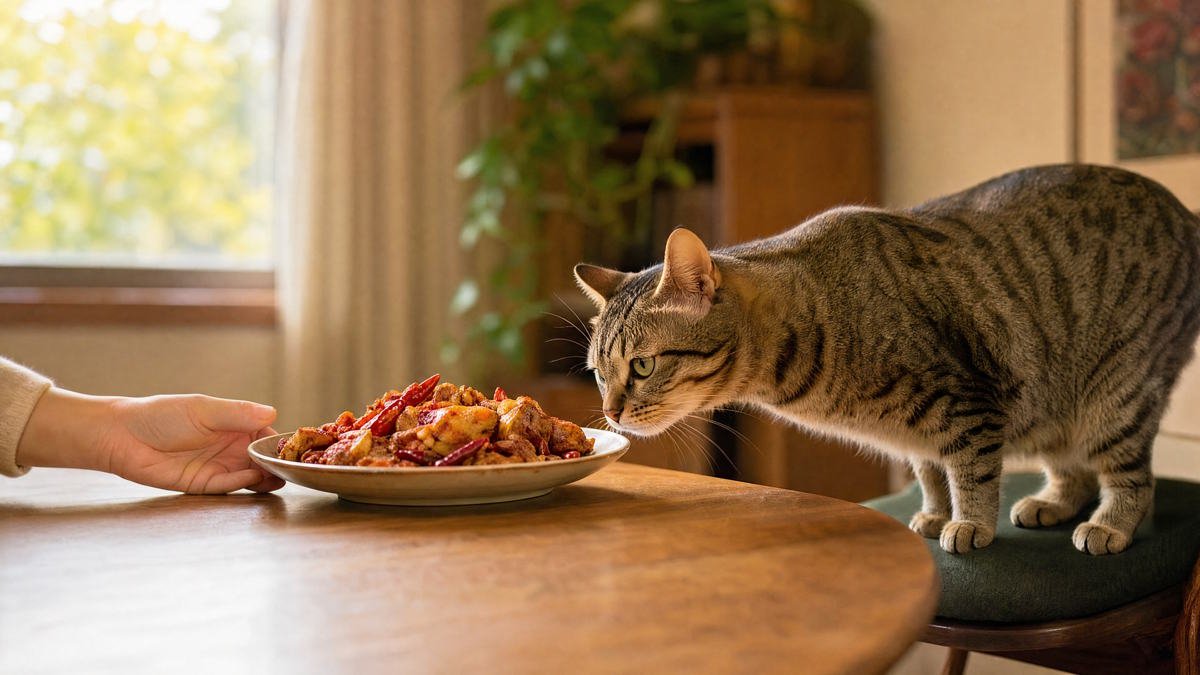
You turn your back during dinner, and your cat is suddenly sniffing the spicy chicken on your plate. It is natural to wonder: can cats eat spicy food? The safest answer is no. Chili and hot sauces can irritate a cat’s mouth and stomach. More concerning, some spicy dishes contain onion or garlic, which can be toxic to cats. Your cat may simply be drawn to the smell of meat rather than the seasoning. Here is how to recognize trouble, respond to an accidental bite, and share safer foods without putting your curious companion at risk.
Can Cats Eat Spicy Foods?
No. Cats should not be deliberately fed spicy food. Capsaicin, the substance that gives chili peppers their heat, can irritate the mouth and digestive tract. A spicy dish may also contain onion, garlic, excess salt, or rich fats. Those ingredients create risks beyond the heat itself, so plain, unseasoned food is a safer choice.
A curious sniff or stolen lick does not mean your cat likes spicy flavors. Many dishes smell appealing because they contain chicken, fish, or cooking fat. Cats are skilled at investigating anything that arrives on your plate, but curiosity does not make food safe.
Is Spicy Food Bad for Cats?
Yes. Spicy ingredients may cause drooling, mouth discomfort, vomiting, or diarrhea. How serious the reaction becomes depends on the food, the amount eaten, and the individual cat. A tiny taste of plain chili is different from eating a large serving of stew seasoned with garlic.

Can Cats Taste Spicy Food?
Cats can sense the irritating heat of chili, although “spicy” is not a basic taste like sweet or salty. Capsaicin activates irritation and pain-sensing nerves. Cats do not need this sensation or any spicy seasoning to enjoy a healthy diet.
What Happens If Cats Eat Spicy Food?
After eating spicy food, a cat may show temporary mouth irritation or stomach upset. However, the ingredients matter more than the word “spicy.” Onion and garlic can damage red blood cells and cause anemia, sometimes with delayed signs. Never assume your cat is safe simply because it seems normal immediately afterward.
Common Symptoms After Eating Spicy Food
- Repeated licking, excessive drooling, or pawing at the mouth
- Vomiting, diarrhea, or obvious stomach discomfort
- Refusing food, hiding, or acting unusually restless
- Weakness, pale gums, or rapid breathing after a potentially toxic ingredient exposure
Mild irritation and poisoning can look similar at first. Keep a close eye on your cat, but do not wait for symptoms if you know the food contained an ingredient that is toxic to cats.
What Should You Do If Your Cat Eats Spicy Food?
First, remove the food. Check the ingredient list or recipe, estimate the amount eaten, and note the time. Offer fresh water, but do not force your cat to drink. Contact a veterinarian promptly when onion, garlic, chocolate, alcohol, or another suspected toxin is involved, even if your cat appears well.
Seek urgent veterinary care for repeated vomiting, marked weakness, breathing trouble, collapse, or other serious changes. Do not induce vomiting or give milk, oils, antacids, or human medications unless a veterinarian directs you to do so.
Can Cats Eat Different Types of Spicy or Seasoned Food?
Not every unsafe food is hot. Temperature, acidity, oil, and seasoning can each affect a cat differently. The following answers help separate those risks.
Can Cats Eat Hot Food?
If “hot” means very warm rather than spicy, let cooked food cool before serving it. Food that is too hot can burn a cat’s mouth. Offer small portions at a comfortable temperature, without sauces or seasonings.
Can Cats Eat Sour Food?
Sour foods provide no essential benefit to cats. Highly acidic foods may upset the stomach, while citrus peels and concentrated citrus oils present additional concerns. Check the actual ingredients rather than treating sourness alone as a safety test.
Can Cats Eat Fried Food or Oily Food?
It is better to avoid greasy fried food. Excess fat may cause vomiting or diarrhea, and frequent calorie-rich scraps can promote weight gain. Plain baked, boiled, or otherwise thoroughly cooked meat is a better occasional treat.
Can Cats Eat Junk Food?
Chips, heavily seasoned snacks, and processed leftovers are poor choices. They may contain excessive salt, fat, onion powder, or garlic powder. A cat does not benefit from these foods, even when it keeps begging for a taste.
What Foods Are Toxic to Cats?
Several human foods can harm cats whether or not they taste spicy. Sauces, marinades, stocks, and spice blends may hide risky ingredients. Always check the full recipe before sharing a bite.
Don’t Feed Your Cat These Foods
- Onion, garlic, leeks, and chives, including dried or powdered forms: can damage red blood cells.
- Chocolate, coffee, and other caffeinated foods or drinks: contain harmful stimulants
- Alcohol and raw yeast dough: can cause dangerous systemic effects
- Grapes and raisins: avoid feeding them because pet safety concerns remain
- Very salty food, unsafe additives, and heavily seasoned leftovers: may cause illness
If your cat eats a potentially toxic ingredient, contact your veterinarian for advice immediately. Some effects appear later, and the safest response depends on the amount, timing, and your cat’s health.
What Human Food Can Cats Eat?
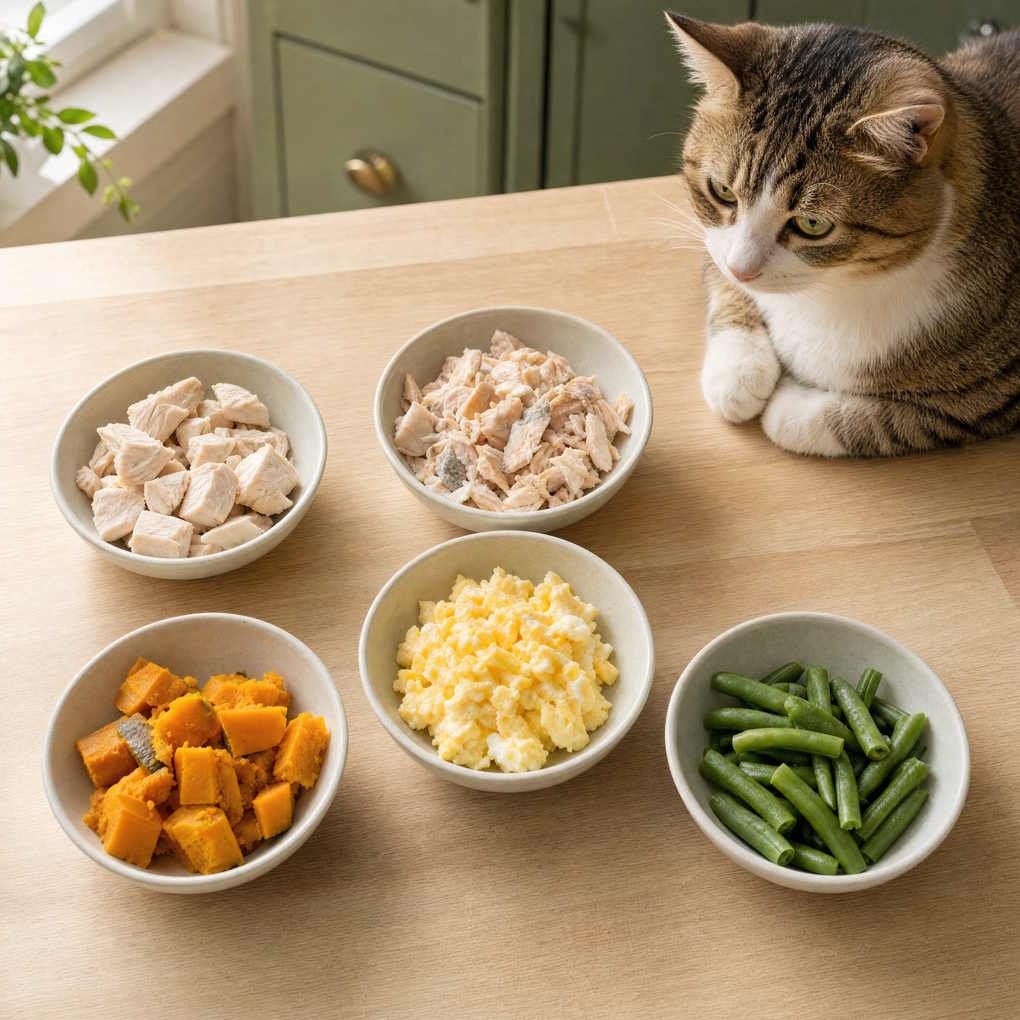
Some plain human foods can be shared as small, occasional treats. They should never replace complete and balanced cat food. Introduce one new food at a time, offer a tiny portion, and stop if your cat experiences digestive upset.
A practical rule is to keep treats at or below 10% of daily calories. That leaves most calories for a nutritionally balanced diet. Cats with allergies, kidney disease, or other medical needs may require stricter limits.
Human Food for Cats List
| Human food | How to offer it |
| Cooked chicken | Plain, skinless, boneless, and unseasoned |
| Cooked turkey | Fully cooked, boneless, and without added salt |
| Cooked fish | Thoroughly cooked, boneless, and offered occasionally |
| Cooked eggs | Fully cooked without butter, oil, or seasoning |
| Plain cooked pumpkin | Small spoonfuls without sugar or spices |
| Cooked carrots | Soft, plain, and cut into tiny pieces |
| Cooked green beans | Soft, unseasoned, and offered in small portions |
What Human Food Can Cats Eat as a Treat?
A little cooked, unseasoned chicken or turkey is often enough. Cut it into small pieces, remove bones, and count it toward the daily treat allowance. Some cats enjoy cooked fish or egg, but variety is optional. The safest treat is one your cat tolerates without reducing its appetite for regular meals.
What Food Is Good for Cats?
Cats are obligate carnivores. That means they depend on nutrients commonly supplied by animal-based ingredients, including taurine, an essential amino acid. They also need suitable levels of protein, fats, vitamins, and minerals. A complete and balanced diet is designed to provide those nutrients in appropriate amounts.
What Is the Best Cat Food to Feed Your Cat?
There is no single best food for every cat. Wet food contributes water and may suit cats that prefer soft textures. Dry food can be convenient and nutritionally complete, provided it is formulated appropriately. Choose food labeled complete and balanced for your cat’s life stage, and ask your veterinarian about special health needs.
Can Cats Eat Cooked Food?
Yes, cats can have certain plain, thoroughly cooked foods. Remove bones, skin with heavy fat, sauces, and seasonings. Cooked meat alone is not a balanced long-term diet because it can lack essential nutrients in the right proportions.
What Foods Do Cats Love?
Many cats gravitate toward meaty aromas and familiar textures. Freshness, moisture, and serving temperature can influence their interest as much as flavor. One cat may enjoy a little chicken, while another walks away from everything except its usual meal.
What Is a Cat’s Favorite Food?
Chicken, turkey, and fish are common favorites, but there is no universal winner. Preferences develop through smell, experience, and routine. A favorite food is not automatically the healthiest choice, especially if it is heavily seasoned.
Can Cats Taste Sweet Food?
Cats do not have a working sweet-taste receptor as humans do. They may investigate desserts because of fat or aroma, not sweetness. Sugary foods add unnecessary calories, and some desserts contain ingredients that are dangerous to pets.
Can I Feed My Cat Human Food Instead of Cat Food?
Not as a routine substitute. Even a wholesome-looking plate of cooked meat cannot reliably provide every nutrient a cat needs. Unbalanced diets can lead to deficiencies over time. If you want to prepare homemade meals regularly, consult a veterinarian or qualified veterinary nutritionist for a properly formulated recipe.
What to Feed a Cat If You Have No Cat Food
For a short-term emergency, a small meal of plain, fully cooked, boneless chicken or turkey may help bridge the gap for a healthy adult cat. It is not a complete diet. Obtain appropriate cat food as soon as possible, and seek veterinary advice for kittens, sick cats, or cats refusing food.
What Can You Mix With Cat Food?
You can try a little plain cooked chicken, suitable wet cat food, or a small amount of water added to dry food. Introduce changes gradually. Avoid spicy sauces, salty broth, garlic, onions, and rich gravies, even when their smell seems irresistible to your cat.
How to Keep Cats From Eating Spicy Human Food
Preventing a stolen bite is easier than dealing with the aftermath. Keep meals off unattended tables, cover leftovers, and use secure bins. Do not hand over seasoned scraps when your cat begs. Instead, offer a suitable treat in its own bowl during family meals.
A regular feeding schedule also helps. If your cat enjoys supervising dinner, give it a comfortable spot away from the food preparation area. Consistent boundaries work better than scolding after a curious nibble.
Frequently Asked Questions About Cats and Human Food
Can Cats Eat Chili Peppers?
No. Chili peppers contain capsaicin, which can irritate a cat’s mouth and digestive system. Keep fresh chilies, chili flakes, and hot sauces out of reach.
Can Cats Eat Spicy Chicken?
No. Plain, thoroughly cooked chicken may be suitable, but marinades and seasonings make spicy chicken a poor choice. Onion or garlic in the recipe can pose an additional poisoning risk.
Is Baby Food Good for Cats?
Some plain meat-based baby foods may be used briefly with veterinary guidance if the ingredients are safe. Check carefully for onion and garlic. Baby food is not nutritionally complete for cats.
What Food Makes Cats Fat?
Any food can contribute to excess weight when total calories are too high. Large portions, frequent treats, and fatty table scraps make overfeeding easier. Ask your veterinarian about an appropriate daily calorie target.
When Can a Kitten Eat Solid Food?
Kittens generally begin trying softened solid food around three to four weeks of age. Weaning happens gradually while they still receive suitable milk nutrition. Their food should be formulated for growing kittens.
How Do Cats Get Their Food in the Wild?
Wild-living cats hunt small prey, guided by movement, smell, and instinct. Pet cats still show hunting behaviors, even when they receive regular meals. Domestic cats depend on their caregivers for safe, nutritionally complete food.
Should You Give Your Cat Spicy Food?
So, can cats eat spicy food? They should not. Chili can cause painful irritation, and common additions such as onion and garlic may be genuinely toxic. Keep spicy dishes and leftovers away from curious paws. Feed a complete, balanced diet, and share only small portions of appropriate plain foods as treats. If your cat swallows a potentially dangerous ingredient or develops concerning symptoms, contact a veterinarian promptly. A little prevention lets your cat enjoy mealtime safely.
One Reply to “Can Cats Eat Spicy Food?”