
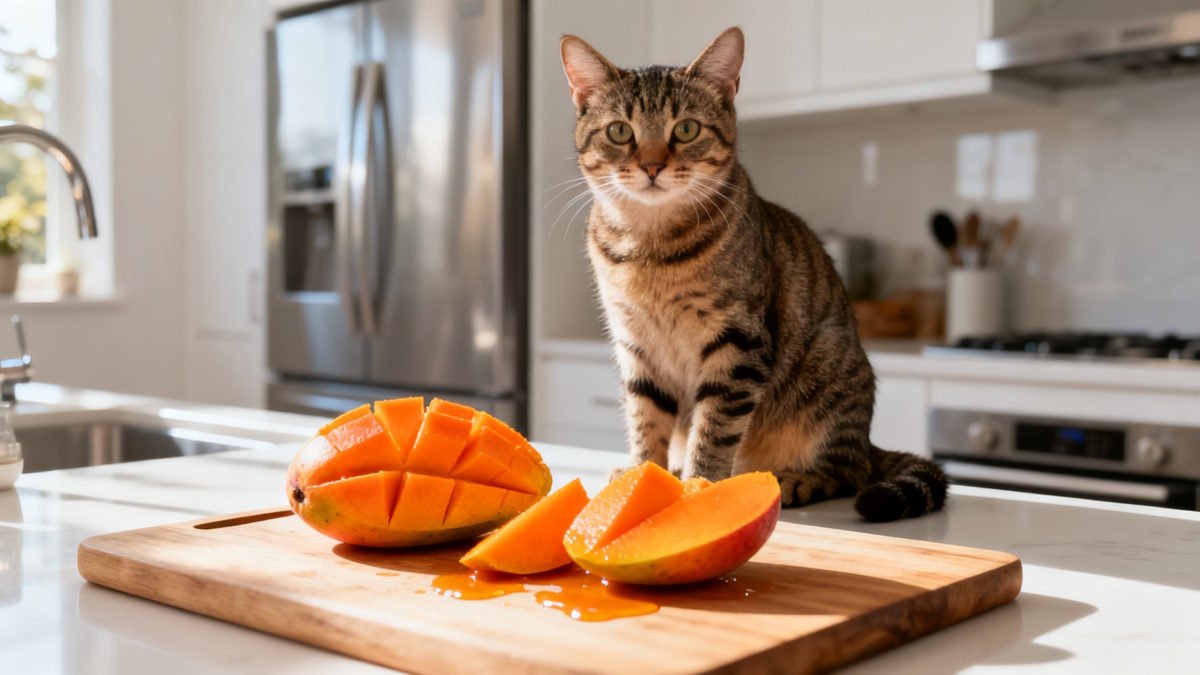
Most healthy adult cats can eat a tiny amount of fresh, ripe mango flesh as an occasional treat. The sweet fruit flesh is non-toxic to felines. However, you must always remove the tough skin and large inner pit before serving any to your pet.
In fact, cats are obligate carnivores. This means their bodies require meat to survive and thrive. Consequently, fruits like mango offer no essential nutritional value to a feline’s daily diet. Any fruit should remain a rare indulgence rather than a regular meal addition.
On top of that, fruit should never replace a complete and balanced commercial cat food diet. While your curious companion might sniff at a fresh piece because of its unique texture or aroma, others will simply walk away. Every cat reacts differently to new smells and foods.
Is Mango Good for Cats? Nutritional Benefits and Limitations
What Nutrients Does Mango Contain?
Mangoes are packed with valuable vitamins, antioxidants, and minerals that benefit human health.
- Vitamin A: Supports healthy vision, cell growth, and immune function.
- Vitamin C: Acts as a powerful antioxidant to combat cell damage.
- Vitamin B6: Helps with metabolism and red blood cell production.
- Dietary Fiber: Supports digestive health and regular bowel movements.
- Water Content: Promotes hydration and overall fluid balance.
In addition, mangoes contain natural sugars and essential trace elements. However, cats process nutrients very differently from humans.
Why Cats Don’t Need Mango in Their Diet
Humans rely on a varied omnivorous diet to collect essential vitamins. In contrast, cats derive all their necessary nutrients from animal proteins and fats. A high-quality feline food already provides complete and balanced nutrition for your pet.
Furthermore, cats lack the specific taste receptors needed to perceive sweetness. Therefore, your cat does not crave sweet flavors the way you do. Offering fruit is entirely optional and should occur only in very small, controlled amounts.
Potential Risks of Feeding Mango to Cats
High Natural Sugar Content
Although mangoes contain natural sugars, those sugars can still pose health risks for felines. Regular consumption of sugary treats can lead to weight gain and obesity over time. On top of that, cats with pre-existing conditions such as diabetes should avoid high-sugar fruits entirely.
Digestive Problems
A cat’s gastrointestinal tract is built to process meat, not high-fiber plant material. Consequently, eating too much mango can easily upset their delicate digestive system. Excess intake often leads to unpleasant symptoms like vomiting, loose stools, or diarrhea.
Mango Skin and Pit Hazards
The outer peel of a mango is tough, fibrous, and very difficult for a cat to digest. Eating the skin can cause stomach distress or choking.
Even worse, the large central pit presents a severe choking hazard. If a cat swallows a large fragment, it can cause a dangerous intestinal block. Always discard the pit safely in a closed trash can.
Individual Sensitivities
Every cat possesses a unique digestive system. While one cat might tolerate a tiny nibble without issues, another might develop an upset stomach immediately. Always monitor your pet closely whenever you introduce any unfamiliar food item.
How to Safely Feed Mango to Your Cat
Choose Fresh, Ripe Mango
Always select fresh, fully ripe fruit when sharing a treat with your pet. Avoid any fruits that appear spoiled, bruised, or overly moldy. Never offer fruit that contains added sugars, spices, or chemical preservatives.
Wash, Peel, and Remove the Pit
Thoroughly rinse the fruit under clean running water to remove potential pesticide residue. Next, peel away all the tough outer skin completely. Finally, cut the soft flesh away from the hard inner pit to ensure total safety.
Offer a Tiny Portion
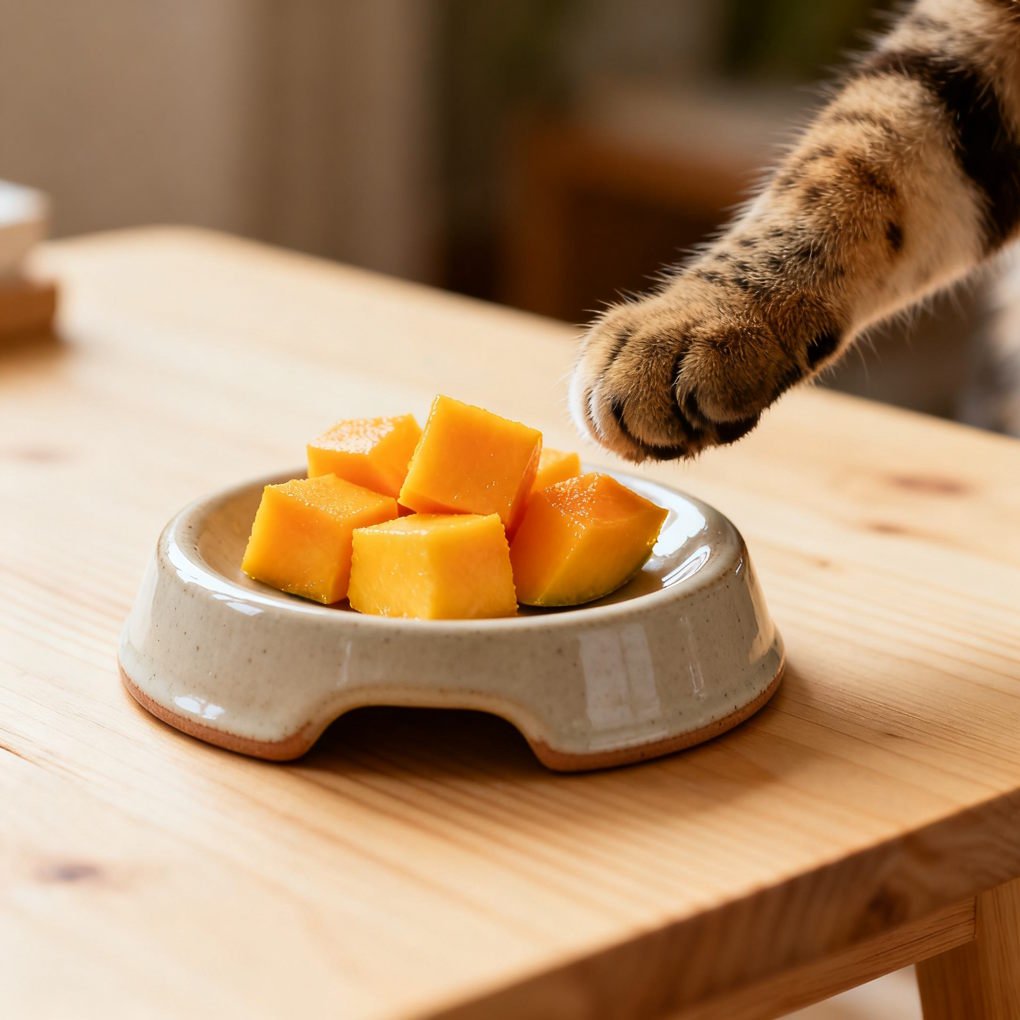
Slice the soft flesh into tiny, bite-sized pieces about the size of a fingernail. Offer just one small piece to your cat and watch how they react. Keep portions small, adjusting them based on your cat’s weight and overall health.
Avoid Processed Mango Products
Never feed your cat dried mango, canned fruit in heavy syrup, or mango-flavored desserts. Dried fruit contains highly concentrated sugar levels that strain your cat’s digestion. Processed snacks may also contain artificial sweeteners or preservatives that are toxic to pets.
Can Kittens Eat Mango?
Kittens should not eat mango. Young felines have very delicate, developing digestive systems that require precise nutrient balances. During their early growth stages, kittens need specialized, high-protein kitten food to support bone and muscle development.
Introducing human foods, such as fruit, can easily trigger severe stomach upset or diarrhea in young kittens. Diarrhea quickly leads to dangerous dehydration in small animals. Always consult your veterinarian before offering any treat outside of standard kitten food.
What Should You Do if Your Cat Accidentally Eats Mango?
If Your Cat Eats a Small Amount of Mango Flesh
If your healthy adult cat sneaks a small piece of plain, ripe mango flesh, stay calm. In most cases, a tiny piece will not cause serious harm. Simply monitor your cat over the next 24 hours for any minor signs of digestive discomfort.
If Your Cat Eats the Mango Pit
Swallowing a piece of the mango pit is a serious medical emergency. The sharp or bulky structure can cause internal lacerations or blockages in the digestive tract. Contact your emergency veterinarian or pet poison helpline immediately for professional guidance.
When to Contact Your Veterinarian
Seek immediate veterinary care if your cat shows any concerning physical symptoms after eating fruit. Key warning signs include:
- Repeated vomiting or severe dry heaving
- Persistent diarrhea or bloody stools
- Visible lethargy, weakness, or hiding behavior
- Signs of abdominal pain or swelling
- Loss of appetite lasting longer than 24 hours
Can Dogs Eat Mango?

Yes, dogs can eat mango flesh safely when served in moderation as an occasional treat. Mangoes provide dogs with vitamins A, B6, C, and E, along with helpful dietary fiber.
However, you must always remove the tough skin and pit before sharing. The pit contains small traces of cyanide and presents a choking hazard. Adjust portion sizes based on your dog’s size, and consult your vet if your dog is overweight or diabetic.
Can Rabbits Eat Mango?
Healthy adult rabbits can eat a very tiny piece of mango as a rare treat. However, because mangoes contain high levels of natural sugar, overfeeding can disrupt a rabbit’s sensitive gut flora.
Hay and fresh grass must always form the core foundation of a rabbit’s daily diet. Offer fruit only in tiny portions—no larger than a small spoon—once or twice a week at most. Always monitor their droppings for any changes after introducing fruit.
Can Dogs Eat Unripe Mango?
No, dogs should not eat unripe or green mangoes. Unripe fruit is hard, extremely sour, and highly acidic, which makes it very difficult for dogs to digest properly.
The high acidity in green mangoes frequently causes stomach irritation, severe vomiting, and painful cramping. Always wait until the fruit is fully ripe, soft, and sweet before preparing a small, safe portion for your dog.
When Can Babies Have Mango?
Babies can usually start eating mango around six months of age, provided they are developmentally ready for solid foods. At this stage, smooth mango purees or mashed fruit offer a great way to introduce new flavors.
As your infant grows and develops chewing skills, you can transition to small, soft, bite-sized pieces. Always peel the skin, remove the pit completely, and avoid adding sugar. Supervise your baby closely during mealtimes to prevent choking incidents.
Frequently Asked Questions About Cats and Mango
Can Cats Eat Dried Mango?
No, cats should avoid dried mango. Dried fruit features concentrated sugar levels and a tough, chewy texture that can upset a cat’s stomach or stick to their teeth.
Can Cats Eat Mango Skin?
No, cats cannot easily digest mango skin. The skin is tough, difficult to chew, and may carry residual pesticides that cause digestive irritation or choking.
Can Cats Drink Mango Juice?
No, cats should not drink mango juice. Store-bought juices contain elevated sugar levels, artificial flavors, and preservatives that offer zero health benefits and can cause upset stomachs.
Can Cats Eat Frozen Mango?
Yes, cats can eat a small piece of plain, thawed frozen mango. Ensure the fruit contains no added sugars, syrups, or chemical additives before serving.
How Often Can Cats Eat Mango?
Mango should only be an occasional treat. Limit fruit servings to once every few weeks, keeping the portion to a single bite-sized piece.
Should You Feed Mango to Your Cat?
In summary, fresh, ripe mango flesh is non-toxic and generally safe for most healthy cats in tiny quantities. However, it provides no essential dietary benefits to obligate carnivores.
If you decide to share a bite, always peel the skin, discard the pit, and serve only a small piece. Always prioritize complete feline nutrition, and consult your veterinarian before introducing new human foods to your pet’s diet.