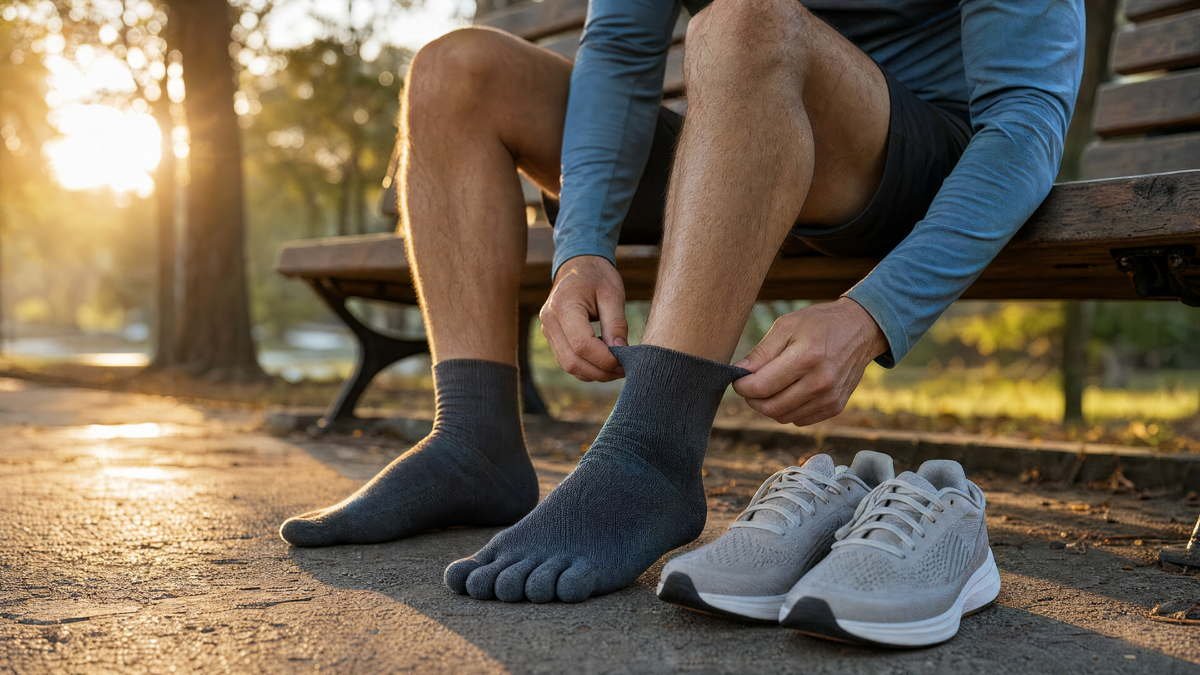
Nothing ruins a great morning jog faster than a stinging hot spot between your toes. If you have ever finished a long run with sweaty feet or painful blisters, you know how frustrating sock friction can be. That is why many athletes wonder: are toe socks good for running?
Instead of wrapping all five digits in one shared pouch, these five-toe running socks give each toe its own snug fabric sleeve. Toe socks can be a comfortable option, particularly for runners experiencing friction between their toes, though their effectiveness depends on fit, footwear, and personal preference.
What Are Toe Socks?
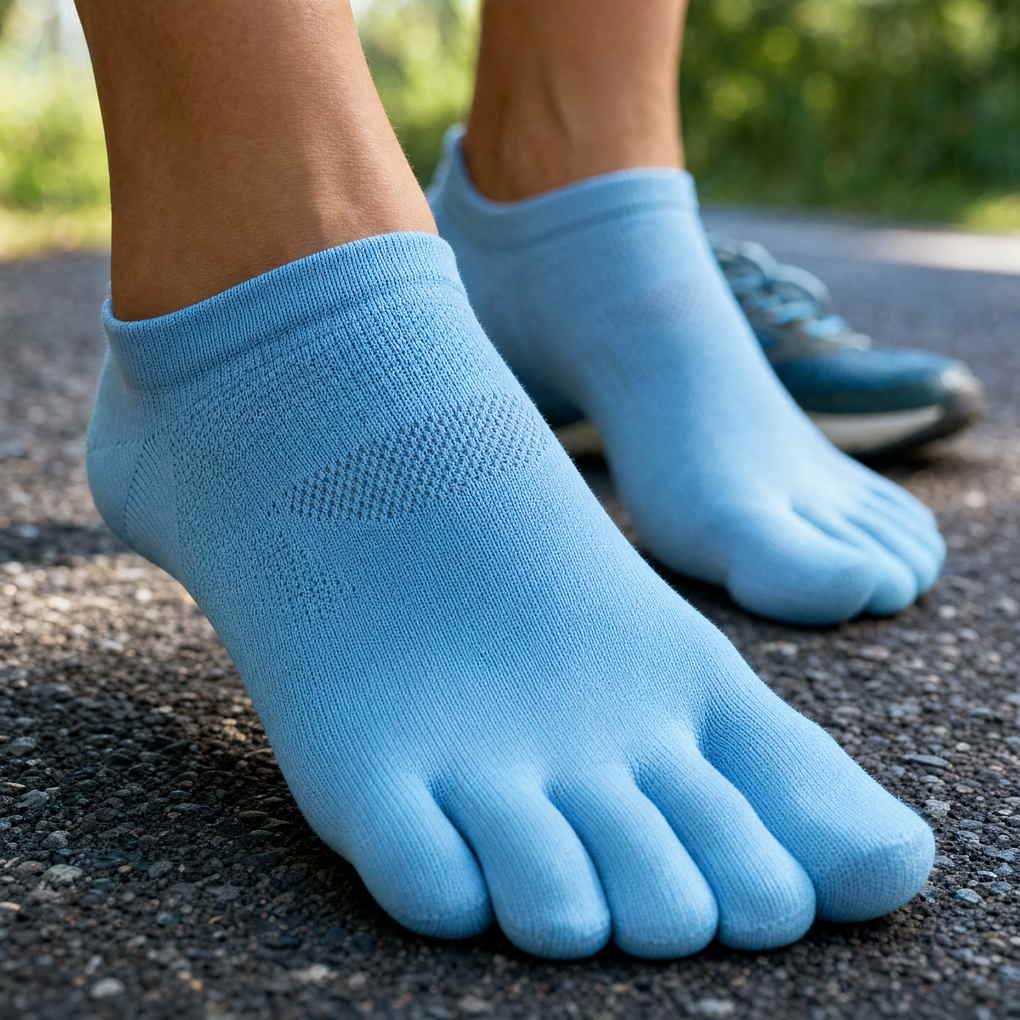
Toe socks are athletic socks knitted with five individual compartments that fit over your foot, much like a glove fits over your hand. Unlike regular running socks that bunch all five toes together in a single pocket, this design completely surrounds each digit in soft, breathable fabric.
Manufacturers typically craft running toe socks from moisture-wicking synthetic blends such as polyester, nylon, and elastane, or from natural temperature-regulating fibers such as merino wool. Elastane provides gentle stretch so the sleeves hug each toe without slipping or bunching mid-stride.
How Do Toe Socks Work?
By wrapping every toe separately, these socks place a thin layer of fabric between neighboring toes. As a result, your skin rubs against smooth textile fibers rather than pressing directly against adjacent skin during repetitive foot strikes.
Additionally, moisture-wicking yarns pull sweat away from the tight spaces between your digits, helping your feet stay drier. However, keep in mind that toe socks only manage surface friction and moisture—they do not alter your natural gait or automatically fix running mechanics.
Are Toe Socks Good for Running?
Yes, toe socks are good for running if you struggle with skin-to-skin rubbing, trapped sweat, or irritation between your toes. They work well across short daily jogs, marathon training, and rugged trail runs, provided your running shoes have a wide enough toe box to accommodate the extra fabric.
That said, comfort varies widely from runner to runner. While many athletes swear by toe socks for runners, clinical research on friction blisters shows that direct scientific evidence proving toe socks prevent blisters better than standard athletic socks remains limited. Ultimately, your overall shoe fit, skin moisture levels, and personal comfort preferences matter most.
Benefits of Wearing Toe Socks for Running
Switching to five-toe running socks can solve several everyday annoyances on the road or trail. Here are five practical benefits of toe socks that keep runners coming back to them.
1. May Help Reduce Friction Between Toes
Every time your foot hits the pavement, your toes splay outward and press together inside your shoe. Over thousands of steps, that constant skin-on-skin contact creates heat and painful hot spots. Individual fabric sleeves act as a gentle buffer, preventing adjacent toes from chafing against each other.
2. Can Help Manage Moisture and Sweat
Your feet contain thousands of sweat glands, and the narrow crevices between your toes trap moisture easily. Moisture-wicking running socks made from merino wool or synthetic blends absorb sweat between every digit and move it outward to evaporate. Compared to heavy cotton socks that stay soggy, this design keeps your feet noticeably fresher on humid summer runs.
3. May Improve Toe Comfort
Many runners enjoy the unrestricted, natural sensation of having each toe housed in its own sleeve. Rather than feeling squeezed together at the front of the shoe, your digits can move independently as you push off the ground. Of course, you will only notice this comfort boost if your running shoes offer enough forefoot width.
4. May Be Comfortable During Long-Distance Runs
Marathon and ultramarathon runners frequently experiment with toe socks for blisters and irritation during high-mileage weeks. When you stay on your feet for hours, minor friction and dampness quickly escalate into race-ending discomfort. Testing five-toe socks during long training runs helps you see whether they keep your feet happier for longer.
5. Offer an Alternative to Traditional Running Socks
If you have tried countless traditional socks and still deal with irritated toes, individual compartments offer a genuinely different approach. They do not magically boost your race pace, nor do they suit every foot shape. Still, they give frustrated runners a practical, low-risk alternative worth testing.
Disadvantages of Toe Socks for Running
Despite their loyal fan base, toe socks are not right for everyone. Before stocking your drawer, consider four common drawbacks runners run into.
They Can Take Longer to Put On
Pulling on traditional socks takes two seconds, whereas toe socks require guiding all five digits into their individual slots. If you are rushing out the door for an early morning workout or transitioning quickly during a race, that extra minute of fussing can feel tedious.
They May Feel Uncomfortable Initially
Having fabric wedged between every toe feels strange at first. During your first few runs, you may be hyper-aware of the seams and sleeves. Most runners adapt after two or three sessions, though some people simply never get used to the sensation.
They May Not Fit Every Running Shoe
Wrapping each toe in fabric adds slight bulk across the width of your forefoot. If you wear running shoes with a narrow, tapered toe box, that extra material can crowd your toes and cause unwanted pressure. You need adequate forefoot room for the socks to feel comfortable.
They Can Be More Expensive
Knitting five separate toe pockets requires specialized machinery and intricate construction. Consequently, quality running toe socks usually cost more per pair than standard athletic socks. You will need to decide whether the added toe comfort justifies spending a little extra.
Toe Socks vs. Regular Running Socks: Which Is Better?
Choosing between toe socks and regular socks comes down to how your feet behave inside your shoes. Regular running socks offer quick convenience, familiar comfort, and easy compatibility with virtually any footwear, while toe socks prioritize individual digit separation and targeted moisture control.
| Feature | Toe Socks | Regular Running Socks |
| Toe separation | Individual compartments | Shared toe compartment |
| Skin-to-skin toe rubbing | Creates a fabric barrier | Toes may rub together |
| Moisture management | Depends on fabric | Depends on fabric |
| Ease of wearing | Takes more effort | Generally easier |
| Shoe compatibility | Requires adequate toe space | Fits most running shoes |
| Comfort | Depends on preference | Familiar to most runners |
| Blister prevention | Limited direct evidence | Depends on materials, fit, and design |
If your feet stay blister-free in conventional socks, there is no reason to switch. On the other hand, if friction between your toes constantly interrupts your training, trying a pair of toe socks makes practical sense.
Who Should Wear Toe Socks for Running?
Certain runners stand to gain much more from individualized toe coverage than others. Consider testing a pair if you fall into one of these groups.
Runners Prone to Toe Friction
If you regularly develop pinched skin, calluses, or blisters on the sides of your toes, traditional socks may not offer enough protection. Placing fabric directly between irritated digits often provides immediate relief.
Marathon and Long-Distance Runners
During half marathons, marathons, and ultra-distance events, minor annoyances multiply over the miles. Long-distance runners frequently test different sock constructions during peak training blocks to eliminate friction before race day.
Trail Runners
Running on uneven dirt, rocks, and steep descents causes your feet to shift inside your shoes far more than flat road running. Pairing toe socks with well-fitted trail shoes helps manage that extra forefoot movement and sweat.
Runners Looking for Alternative Sock Designs
Every runner has unique toe lengths, foot widths, and sensory preferences. If standard socks feel restrictive or trap sweat between your toes, five-toe designs offer a worthwhile alternative—though happy traditional-sock wearers have no need to change.
How to Choose the Best Toe Socks for Running
Picking the best toe socks for running requires paying close attention to fabric, sizing, and shoe space. Follow these five simple tips before heading out.
Choose Moisture-Wicking Materials
Skip cotton completely, as it holds onto sweat and increases skin friction. Instead, look for performance blends made from polyester, nylon, or fine merino wool to keep your skin dry and breathable.
Get the Right Size and Fit
Check the manufacturer’s sizing chart carefully. Each toe pocket should sit snugly against the tip of your toe without excess fabric bunching up or tight seams pulling uncomfortably.
Consider Cushioning and Thickness
Ultralight, thin toe socks work wonderfully for hot-weather road runs and snug shoes. Meanwhile, lightly cushioned versions add extra underfoot padding for rocky trails or long-distance pavement sessions.
Check Compatibility With Running Shoes
Put your new toe socks on and slip into your actual training shoes before running. Wiggle your toes to confirm you still have plenty of room across the forefoot without pinching.
Test Them Before Long-Distance Running
Never debut new socks on race morning. Start with an easy three- to five-mile training run to monitor pressure points and sweat buildup, then gradually increase your distance if everything feels great.
Frequently Asked Questions About Toe Socks for Running
Do Toe Socks Prevent Blisters When Running?
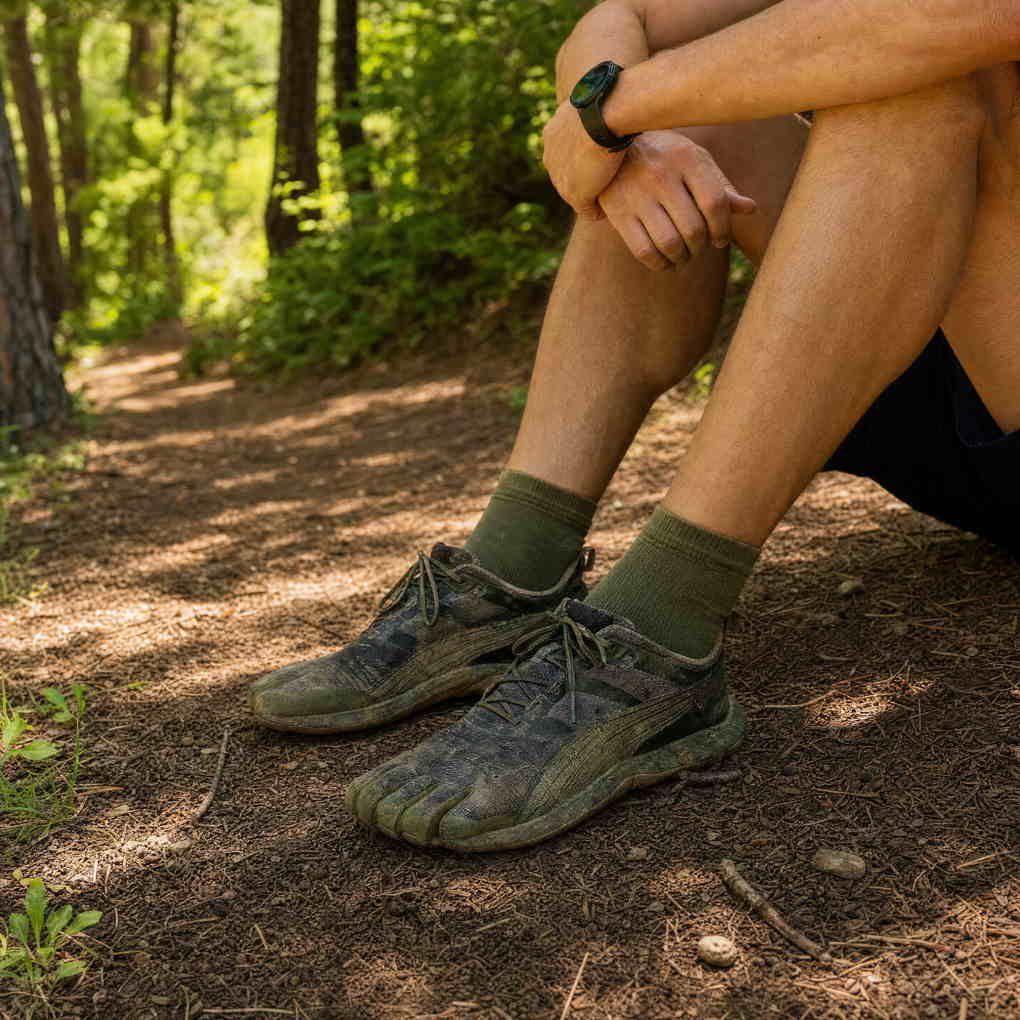
Toe socks reduce direct skin-to-skin rubbing between your toes, which can lower irritation for some runners. However, clinical studies have not proven that they reliably prevent all running blisters. Proper shoe fit, moisture management, and overall sock construction play equally important roles.
Are Toe Socks Good for Marathon Running?
Yes, many marathon runners enjoy toe socks because individual sleeves help manage sweat and toe friction over 26.2 miles. Comfort remains highly personal, so always test them during your longest training runs well before race day.
Can You Wear Toe Socks With Regular Running Shoes?
Yes, you can wear toe socks with regular running shoes as long as the toe box is wide enough. Because the extra fabric between each toe slightly widens your forefoot, tight or narrow shoes may feel cramped.
Are Toe Socks Better Than Compression Socks?
Neither option is universally better because they serve completely different purposes. Toe socks separate your digits to minimize toe friction, whereas compression socks apply graduated pressure around your lower leg and arch to support circulation and reduce muscle fatigue.
Should Beginners Wear Toe Socks for Running?
Beginners can certainly try toe socks, especially if they notice toe rubbing early on. Still, new runners should first focus on getting properly fitted running shoes and breathable, moisture-wicking socks before experimenting with specialized designs.
Are Toe Socks Worth It for Running?
So, are toe socks good for running? For runners constantly bothered by sweaty, chafing toes, they can be a game-changing comfort upgrade. Yet they are not automatically superior to well-made traditional running socks, nor are they a guaranteed cure for every blister.
Focus first on proper shoe fit, breathable fabrics, and overall comfort. If you are curious about five-toe designs, grab a single pair, slip them into roomy training shoes, and test them on a short local run before taking them the distance.