

If you have spent time at a local road race, boarded a long-haul flight, or walked past a hospital nursing station, you have probably noticed tall, snug-fitting socks everywhere. Once reserved mostly for medical recovery, these garments are now daily staples for runners, office workers, and frequent travelers.
They come with bold promises: better blood flow, less ankle swelling, faster muscle recovery, and even personal-record race times. Yet with so much hype, it is fair to ask: are compression socks effective, or are they just tight fabric with clever marketing?
The short answer is yes —they work, but only for specific goals. Their real value depends on why you wear them, how tightly they squeeze, and whether they fit properly. Below, we break down what science says, who benefits most, and how to choose the right pair.
What Are Compression Socks and How Do They Work?
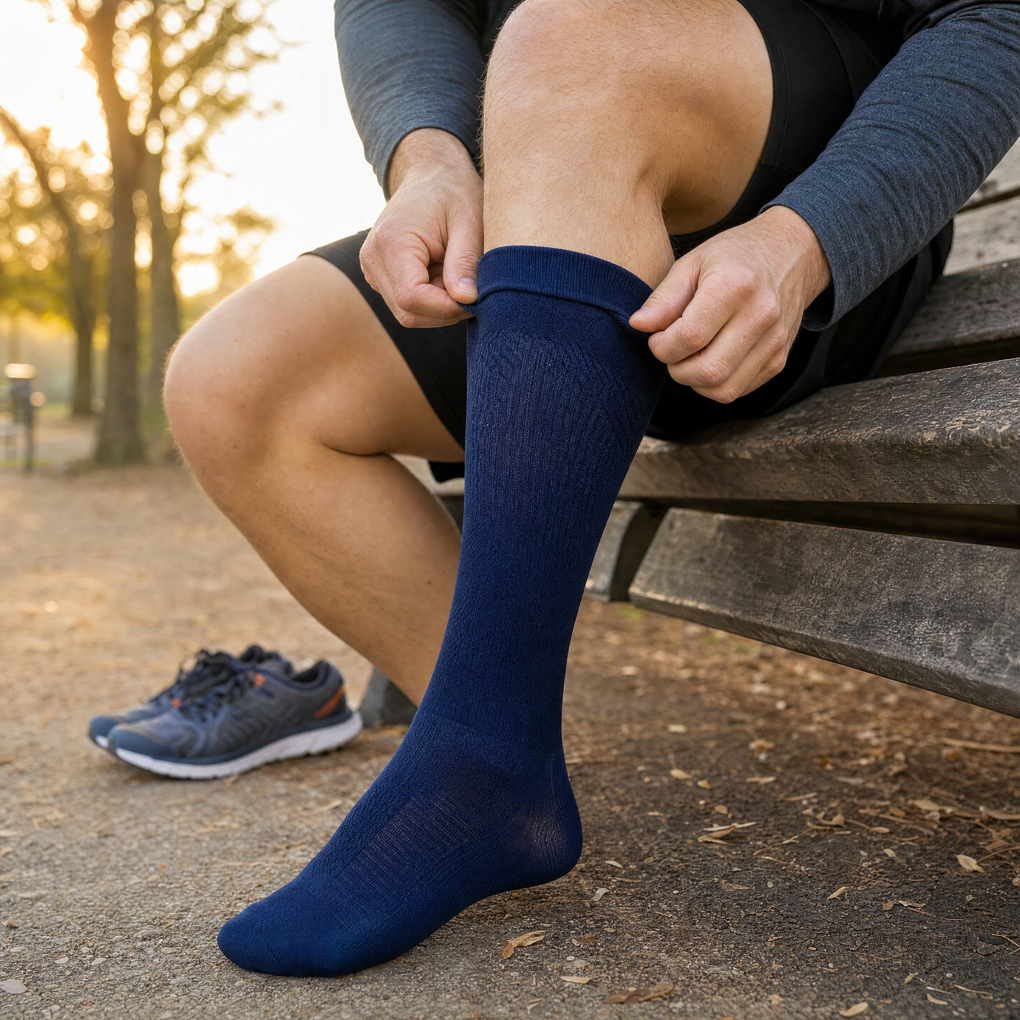
Compression socks are specially woven elastic garments designed to apply gentle, consistent pressure to your lower legs. Unlike standard athletic socks that simply cushion your feet, these socks actively hug your ankles and calves to support healthy blood flow.
Understanding Graduated Compression
Most effective compression socks rely on a design called graduated compression. This means the sock squeezes tightest at your ankle and gradually loosens as it moves up toward your knee. Because gravity naturally pulls fluid downward when you sit or stand, your leg veins must work hard to push blood back up to your heart.
Think of graduated compression like gently squeezing a tube of toothpaste from the bottom. That upward pressure narrows slightly stretched veins, helps one-way vein valves close properly, and prevents fluid from pooling around your ankles.
Types of Compression Socks
Not every snug sock offers the same level of support, so knowing the basic categories helps:
- Graduated compression socks: Everyday wellness socks designed with measured pressure gradients for travel, desk work, and standing shifts.
- Athletic compression socks: Breathable, moisture-wicking socks built for runners and gym-goers, often featuring extra arch or heel cushioning.
- Medical-grade compression stockings: Higher-pressure garments prescribed by doctors to treat venous disorders, severe swelling, or post-surgery recovery.
- Knee-high versus thigh-high garments: Knee-high styles cover the foot and calf, while thigh-high stockings extend above the knee for broader medical support for circulation.
Are Compression Socks Really Effective? What Does Science Say?
Are compression socks effective according to clinical research? Yes, for managing leg swelling, tired legs, and certain vein conditions, where studies consistently show measurable relief. However, for healthy runners hoping to boost race speed or endurance, large scientific reviews show little to no direct performance improvement.
Evidence Supporting Circulation and Swelling Relief
In medical settings, compression therapy has decades of strong backing. For example, the 2025 Clinical Practice Guidelines from the Society for Cardiovascular Angiography and Interventions (SCAI) recommend graduated compression therapy as a foundational tool for managing chronic venous disease. Research consistently shows that proper compression reduces lower-leg fluid buildup, eases aching, and relieves heaviness in people whose veins struggle to return blood upward. However, clinical trials typically test medical-grade stockings with verified pressure levels, which differ from light, over-the-counter athletic socks.
Evidence for Athletic Performance and Recovery
When researchers test compression gear on healthy athletes, the results become much more mixed. A comprehensive 2025 systematic review examining runners who wore compression socks during exercise found no meaningful improvements in race times, oxygen uptake, or overall endurance. In other words, tight socks will not magically shave minutes off your 5K. Similarly, a 2026 systematic review on post-exercise compression garments noted that while athletes often feel slightly less sore afterward, measurable gains in next-day endurance remain inconsistent.
Why Results Vary Between Individuals
Two people can wear similar socks and have completely different experiences. Several practical factors shape your results:
- Pressure level and fit: A sock that is too loose provides zero hemodynamic benefit, while an overly tight sock restricts comfort.
- Duration of wear: Wearing socks for an eight-hour shift produces different effects than wearing them for a thirty-minute jog.
- Activity and health baseline: Someone with mild venous sluggishness notices far more relief than a healthy 25-year-old sprinter.
What Are the Benefits of Wearing Compression Socks?
Even though they are not miracle performance boosters, compression socks can make a noticeable difference in how your legs feel during and after demanding days.
Improved Blood Circulation
Healthy circulation relies on your calf muscles acting like a natural pump every time you walk. When you stay still, that pump slows down. Graduated pressure provides your veins with gentle external support, helping blood flow steadily upward toward your heart rather than lingering in your lower extremities.
Reduced Leg Swelling and Discomfort
If your ankles look puffy by 5:00 PM or your calves ache after standing on hard floors, excess fluid—known medically as mild edema—is likely the culprit. Wearing compression socks helps keep fluid within your blood vessels rather than seeping into surrounding tissues. As a result, your legs feel lighter and less fatigued at the end of the day.
Support During Physical Activity
Many runners and walkers still love wearing compression socks during workouts, even without faster times on the stopwatch. Snug fabric reduces soft-tissue vibration—the subtle muscle jiggling that happens every time your foot strikes the pavement. While reduced vibration has not been proven to boost speed, many athletes find it feels supportive, comfortable, and stabilizing over long distances.
Potential Muscle Recovery Benefits
Slipping on compression socks after a tough workout may help ease that heavy, post-training ache. Studies suggest some athletes report lower subjective soreness when wearing compression during recovery hours. Still, current research shows these benefits are modest and mostly tied to how comfortable you feel rather than dramatic physiological repair.
Are Compression Socks Effective for Running and Exercise?
If you run, cycle, or lift weights, you have probably wondered whether compression socks for running deserve a spot in your gym bag. Separating marketing hype from real-world utility helps you spend your energy wisely.
Do Compression Socks Improve Running Performance?
If your primary goal is to run faster or boost aerobic endurance, regular moisture-wicking running socks perform just as well. Controlled studies comparing compression socks against standard athletic socks consistently show similar heart rates, lactate levels, and finishing times. Compression socks will not replace consistent speedwork, proper fueling, or quality sleep.
Do Compression Socks Help With Muscle Recovery After Running?
Hard workouts create tiny micro-tears in muscle fibers, leading to delayed-onset muscle soreness (DOMS) a day or two later. Wearing compression socks after a long run may take the edge off stiffness for some runners. Yet because scientific evidence remains mixed, think of them as a helpful comfort tool alongside hydration and rest, not a cure-all.
Should Runners Wear Compression Socks?
You do not need compression socks to be a successful runner, but they can still be worth wearing if you enjoy how they feel. Many distance runners appreciate the snug arch support, blister protection, and added warmth on chilly morning runs. If they make your legs feel fresher during high-mileage weeks, that comfort alone is a valid reason to wear them.
Who Should Wear Compression Socks?
While anyone can try a light pair for comfort, certain groups tend to experience the clearest everyday rewards.
Athletes and Fitness Enthusiasts
Distance runners, trail hikers, and recreational athletes often use compression socks during long training sessions or post-workout travel. They offer steady calf support and help prevent that heavy-legged feeling after hours on your feet.
People Who Stand or Sit for Long Periods
Nurses, teachers, retail workers, hairstylists, and desk-bound office professionals spend hours fighting gravity. When your legs stay in one position all day, gentle graduated pressure keeps fluid from pooling around your ankles and eases evening leg fatigue.
Frequent Travelers
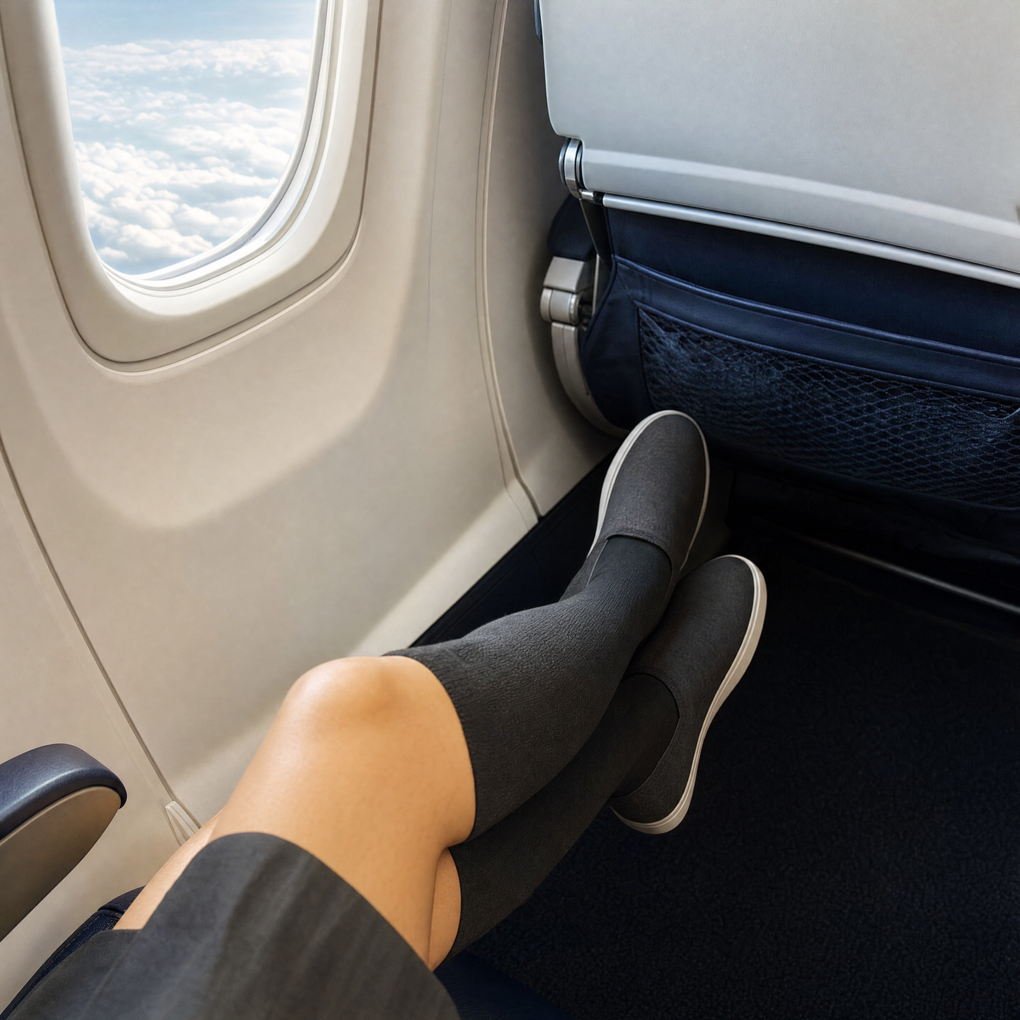
Sitting cramped in an airplane seat or car for four hours or more slows lower-leg circulation. Wearing compression socks for travel can prevent uncomfortable sock-line swelling when you land. For travelers with higher risk factors—such as recent surgery, pregnancy, or a personal history of clots—doctors also recommend graduated stockings to help lower the risk of travel-related deep vein thrombosis (DVT). However, healthy low-risk travelers mostly use them for comfort rather than strict medical necessity.
Individuals With Certain Circulatory Conditions
People managing chronic venous insufficiency, varicose veins, or persistent lower-leg swelling often rely on compression therapy as part of daily care. Because medical conditions require precise pressure levels, always consult a healthcare provider before buying firm medical stockings.
How to Choose the Right Compression Socks
Buying the wrong size or pressure level is the fastest way to hate compression socks. Paying attention to a few simple details ensures a comfortable, effective fit.
Understanding Compression Levels
Compression strength is measured in millimeters of mercury (mmHg), the same unit used for blood pressure readings. Higher numbers mean firmer pressure:
| Compression Level | Strength Category | Common Everyday & Medical Uses |
| 8–15 mmHg | Light compression | Mild daily fatigue, light travel, general comfort during long shifts. |
| 15–20 mmHg | Mild compression | Frequent flights, prolonged standing or sitting, athletic recovery, minor swelling. |
| 20–30 mmHg | Firm compression | Moderate swelling, varicose veins, post-surgery support (usually clinician-guided). |
| 30–40 mmHg | Higher medical compression | Severe venous conditions or lymphedema; requires medical prescription and fitting. |
Keep in mind that labeling standards vary among casual sports socks, whereas medical-grade garments undergo stricter pressure testing. Start at 15–20 mmHg for everyday use, and consult a doctor before increasing to 20–30 mmHg or higher.
Choosing the Correct Size and Fit
Never guess your size based solely on your shoe size. Measure the narrowest part of your ankle and the widest part of your calf first thing in the morning before swelling starts. A good pair should feel snug and supportive without pinching, rolling down at the top band, or bunching behind your knee. Look for breathable nylon-spandex blends or merino wool fabrics that wick sweat and prevent overheating.
Compression Socks vs. Regular Socks
When comparing compression socks vs. regular socks, the difference comes down to active circulation support versus simple foot protection. Regular running socks cushion impact and prevent blisters with uniform, relaxed elasticity. Compression socks actively hug the calf with calibrated pressure. If you run short distances with zero leg fatigue, regular socks are plenty.
Are There Any Downsides to Wearing Compression Socks?
When fitted correctly, light-to-mild compression socks are very safe for most healthy adults. Still, side effects can happen if the socks are too tight, poorly sized, or worn incorrectly.
Common complaints include itchy skin, heat buildup, and deep red pressure indentations around the calf. Never fold the top cuff down, as doubling the fabric creates a tight tourniquet effect that blocks blood flow instead of helping it.
Certain health conditions also require caution. People with severe peripheral artery disease (poor arterial blood flow to the legs), advanced nerve damage with reduced foot sensation, or fragile, weeping skin should avoid compression unless cleared by a doctor. If you ever notice pain, numbness, tingling, or bluish toes, take the socks off immediately. Most importantly, never use compression socks to mask sudden, unexplained swelling in one leg—seek prompt medical evaluation first.
How Long Should You Wear Compression Socks?
How long to wear compression socks depends on your daily routine and comfort level. For desk work, retail shifts, or long flights, most people put them on in the morning and wear them throughout their active hours or journey. For workouts, you can wear them during your run and for one to two hours afterward.
In general, you should take compression socks off before going to sleep. When you lie flat in bed, gravity no longer pulls blood down into your ankles, so your veins do not need extra external pressure. Unless a physician specifically instructs you to wear medical stockings overnight, give your skin a break while you sleep.
Frequently Asked Questions About Compression Socks
Do Compression Socks Actually Improve Circulation?
Yes. Graduated compression gently squeezes your ankles and lower calves, helping your leg veins push blood back up toward your heart. This counteracts gravity when you sit or stand still for long stretches, reducing sluggish blood pooling in your lower legs.
Are Compression Socks Effective for Swollen Feet?
They can help relieve mild, everyday foot and ankle swelling caused by prolonged standing, sitting, or hot weather. However, if foot swelling appears suddenly, affects only one side, or comes with pain or shortness of breath, see a doctor to rule out underlying medical issues.
Do Compression Socks Help Prevent Blood Clots?
Graduated compression stockings can help reduce the risk of blood clots in specific situations, such as long-haul flights for higher-risk travelers or post-surgical recovery. However, they are not a guarantee against clots, and healthy travelers should still walk the aisle, flex their ankles, and stay hydrated.
Is It Okay to Wear Compression Socks Every Day?
For most healthy people, wearing light or mild compression socks (15–20 mmHg) every day is completely fine. Wash them regularly to maintain their elasticity, check your skin for irritation, and remove them at bedtime unless your doctor advises otherwise.
Do Compression Socks Help You Run Faster?
There is no convincing scientific evidence that compression socks make you run faster or improve aerobic endurance. While many runners enjoy the supportive, snug feel during training, any performance boost is likely due to personal comfort rather than measurable physiological gains in speed.
Are Compression Socks Better Than Regular Socks?
Neither option is universally better—it depends on what your legs need. Compression socks are better for managing swelling, long flights, and standing shifts, while regular cushioned athletic socks are ideal for everyday workouts when you simply want breathability and blister protection.
Are Compression Socks Worth Wearing?
So, are compression socks effective enough to earn a spot in your drawer? If you spend all day on your feet, travel frequently, or deal with mild lower-leg swelling and heaviness, the answer is a clear yes. Decades of clinical evidence back their ability to support venous circulation and keep tired legs feeling lighter.
On the other hand, if you are hoping they will dramatically cut your marathon time or replace post-run recovery habits, science suggests keeping your expectations realistic. By choosing the right pressure level, measuring your calves carefully, and matching the sock to your daily routine, you can enjoy practical comfort without falling for exaggerated hype.