

Have you ever tried using a fine pen that glides effortlessly across the paper without cramping your hand? Learning how to write with a fountain pen introduces you to a relaxing, deeply satisfying way to put your thoughts on paper. Unlike standard ballpoint pens that require a firm downward force, a fountain pen uses liquid ink delivered smoothly through a metal nib. Because of the liquid ink flow, learning to write with a fountain pen mainly involves adjusting your grip, finding a comfortable writing angle, relaxing your pressure, and choosing suitable paper.
If you wonder why write with a fountain pen today, the answer lies in both physical comfort and personal style. How do you write with a fountain pen without making a mess or feeling clumsy? It comes down to basic technique. This comprehensive guide covers proper writing technique, practical handwriting improvement, smooth cursive strokes, faster note-taking, and choosing the right fountain pens for everyday tasks and long writing sessions.
How Do Fountain Pens Write?
| A fountain pen writes by drawing liquid ink from an internal reservoir through a feeder to the metallic nib via capillary action. When the nib touches paper, surface tension pulls ink smoothly without requiring heavy downward hand pressure. |
How Ink Travels From the Pen to the Paper
To understand how to write effectively with a fountain pen, it helps to know what happens inside the barrel. Inside every pen sits an ink reservoir or cartridge. This chamber holds water-based liquid ink ready for distribution.
The feed sits directly below the nib. It regulates ink flow while allowing air to travel back into the cartridge. This balance prevents ink from leaking out uncontrollably.
The metallic nib features a microscopic channel and two tines. When you place the pen on paper, capillary action draws the ink down through the channel. Surface tension on the page then pulls the ink freely.
Because capillary action does all the heavy lifting, you need far less pressure than a ballpoint pen requires. Learning how fountain pens write helps you realize that pushing hard only blocks or damages the tool. Understanding this mechanism makes learning how to write with a fountain pen smooth and rewarding.
How to Write with a Fountain Pen
| To learn how to properly write with a fountain pen, sit with good posture, keep your wrist relaxed, hold the nib at a 40–55 degree angle, and apply virtually zero downward pressure. Let the pen gliding motion create smooth ink lines naturally. |
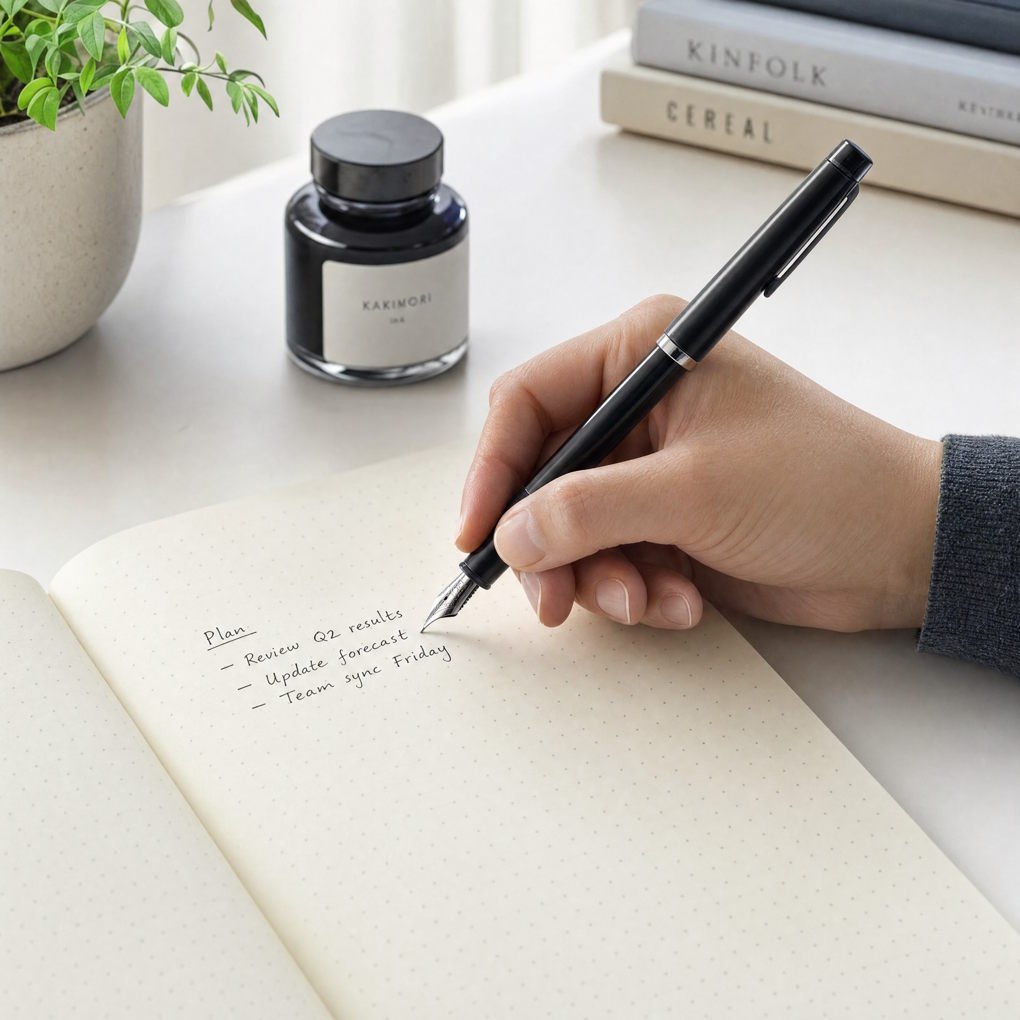
Start With a Comfortable Writing Position
Good handwriting starts before the nib even touches the page. Sit comfortably in your chair with your feet flat on the floor. Keep your shoulder relaxed and your wrist loose.
Position your paper at a natural angle on your desk. Angling the page slightly reduces strain on your forearm and wrist during long sessions.
Place the Nib Correctly on the Paper
Ensure both tines of the nib touch the paper evenly. If you twist the pen sideways, the ink flow stops immediately. Every nib has a ‘sweet spot’ where ink flows most consistently without scratchiness.
Use Light Pressure
Let the ink flow naturally across the page. Excessive pressure can spread or bend the nib tines, permanently ruining the pen. Keeping a light touch reduces hand fatigue dramatically.
Move Your Hand Naturally Across the Page
Move your arm and shoulder rather than squeezing your fingers tight. Squeezing restricts your movement and quickly strains your muscles. Learning how to write properly with a fountain pen means letting your whole arm guide the stroke smoothly.
By practicing these simple steps, learning to write with a fountain pen becomes second nature. Anyone can learn how to write using fountain pen techniques with just a few minutes of daily practice.
How to Hold a Fountain Pen for Good Handwriting
| Hold a fountain pen using a relaxed tripod grip, resting the barrel gently between your thumb, index, and middle finger. Keep your writing angle between 40 and 55 degrees to keep ink flowing without scratching the page. |
Use a Relaxed Tripod Grip
Place the pen barrel between your thumb, index finger, and middle finger. Your index finger rests on top of the section, guiding direction without pressing down. However, other grips work well too as long as the nib tines remain properly aligned.
Find the Right Fountain Pen Writing Angle
Aim for a general fountain pen writing angle of roughly 40 to 55 degrees relative to the paper surface. Ballpoints require a steep upright position, but fountain pens need a lower angle to let ink flow easily from the feed channel.
Avoid Gripping the Pen Too Tightly
Tight grips cause hand fatigue, uneven strokes, and slower writing speeds. If your knuckles turn white, take a pause and shake out your hand. A relaxed hold enables comfortable, long writing sessions and lays the foundation for proper fountain pen hold for good handwriting. Finding the best fountain pen for handwriting starts with holding it correctly.
How to Improve Handwriting With a Fountain Pen
| You can improve handwriting with a fountain pen by slowing down your movement, maintaining uniform letter height, and practicing basic line strokes. The low-pressure design naturally encourages deliberate, controlled wrist motion. |
Slow Down When Practicing
Speed often hides bad habits while practice exposes them. Slow down your strokes to focus on letter shapes, clean spacing, and consistent baseline alignment. Taking your time builds muscle memory faster than rushing.
Practice Basic Strokes Before Letters
Master fundamental strokes before forming full words. Spend a few minutes making straight vertical lines, gentle curves, open loops, and smooth ovals. These basic components form every letter in the alphabet.
Keep Your Letter Size Consistent
Uniformity creates neatness immediately. Use ruled, grid, or dot-grid paper to keep letter heights consistent across sentences. Dot-grid paper offers faint guidelines that maintain a clean structure without distracting from your ink lines.
Practice Short Sessions Regularly
Ten minutes of daily practice produces far better results than one long weekend session. Regular exposure reinforces arm movement and keeps your touch light. In fact, learning how to write neatly with a fountain pen is simply a matter of steady consistency.
How to Write Cursive with a Fountain Pen
| To write cursive with a fountain pen, focus on continuous, fluid arm movements and light downward pressure. Connect common letter pairs smoothly without lifting the nib frequently from the paper. |
Practice Connecting Letters
Fountain pens excel at cursive because liquid ink flows continuously and with minimal friction. Start by practicing simple two-letter combinations like ‘an ‘, ‘in’, ‘th ‘, ‘ch’, and ‘ing’. Focus on smooth transitions between letters.
Maintain Consistent Slant and Spacing
A uniform letter slant makes cursive look elegant and effortless. You do not need exaggerated flourishes; neat, evenly sloped letters look beautiful on their own.
Experiment With Nib Sizes
Fine nibs provide crisp precision for small handwriting, while medium nibs add smooth warmth to flowing lines. Stub nibs automatically create thick downstrokes and thin crossstrokes. Choosing the best fountain pen for cursive writing depends on which nib feel you prefer.
How to Write Fancy with a Fountain Pen
| Writing decorative or fancy script with a fountain pen involves using specialized stub or flex nibs, controlling stroke speed, and choosing rich inks rather than applying heavy hand pressure. |
Everyday handwriting focuses on speed and clarity, whereas fancy lettering emphasizes artistic flair and character. To learn how to write fancy with a fountain pen, consider using stub nibs or flex nibs. Stub nibs feature a flat tip that creates line contrast naturally without extra effort.
Flex nibs spread their tines under gentle pressure to create dramatic calligraphy flourishes. Furthermore, pairing these nibs with shading or shimmering inks adds vibrant character to greeting cards and journals. Beautiful penmanship stems from patient technique rather than expensive tools.
How to Write Fast with a Fountain Pen
| Write fast with a fountain pen by maintaining light hand pressure, choosing a medium or broad nib, and using lightweight pens with balanced ergonomics to reduce physical resistance during quick note-taking. |
Reduce Writing Pressure
Pushing hard against paper creates friction that slows down your hand. When you relax your grip completely, your pen glides across the pages effortlessly. This lack of friction allows you to take fast notes during meetings or lectures.
Use a Comfortable Nib Width
Fine nibs occasionally catch on rough paper fibers when moving quickly. A smooth medium nib delivers generous ink flow, allowing fast movements across almost any surface.
Avoid Oversized or Excessively Heavy Pens
Heavy metal pens strain hand muscles during rapid writing. Look for lightweight resin or acrylic pens that feel balanced, posted, or unposted. Finding the best fountain pen for fast writing ensures comfort throughout busy workdays.
Practice Common Letter Combinations
Train your hand muscles on frequent word prefixes and suffixes. When your hand executes letter clusters automatically, overall writing speed increases naturally without sacrificing legibility.
Choosing the Best Fountain Pen for Writing
| The best fountain pen for writing offers a comfortable grip diameter, reliable ink feed, durable construction, lightweight balance, and a nib width matched to your personal handwriting size. |
Best Fountain Pen for Everyday Writing
A great daily pen needs to be dependable, easy to clean, and sturdy enough to fit in a pocket or bag. Look for snap-on caps for quick note-taking and reliable cartridge systems. The best fountain pen for daily writing balances practical durability with smooth, effortless ink flow.
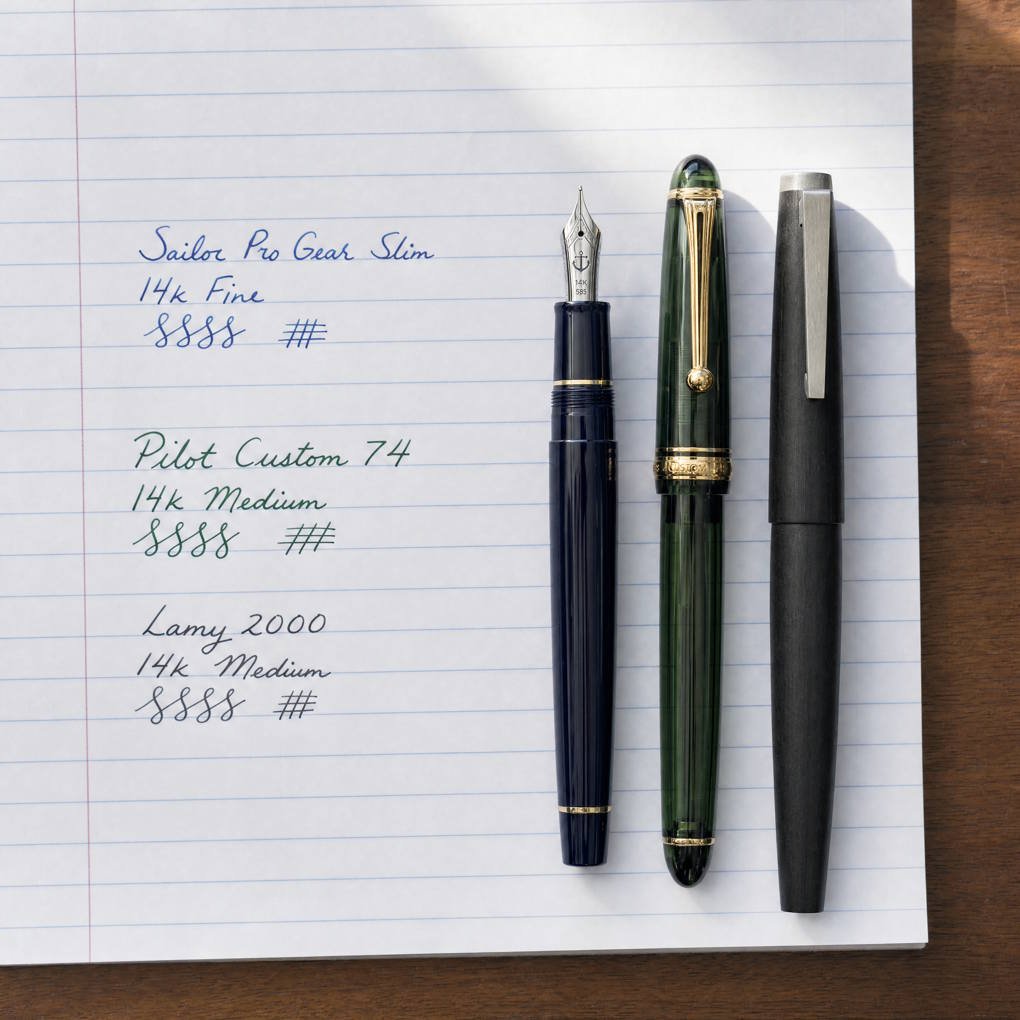
Best Fountain Pen for Long Writing Sessions
When writing long journal entries or book chapters, weight and balance matter most. Pick lightweight pens with comfortable grip sections that prevent hand cramps. Large ink capacity—such as piston or vacuum fillers—keeps you writing without interruption.
What Is the Best Fountain Pen for Writing?
There is no single best writing fountain pen for everyone. The best fountain pens for writing fit your specific hand size, paper preference, and budget. Finding the right choice comes down to personal comfort and daily writing habits.
Best Writing Pads and Paper for Fountain Pens
| The best writing pads for fountain pens feature coated, fountain-pen-friendly paper (70–100 gsm) that prevents feathering, bleed-through, and ink ghosting while retaining vibrant ink color. |
Standard copy paper absorbs liquid ink quickly, like a paper towel, leading to feathering and bleed-through. To enjoy smooth ink flow, invest in fountain-pen-friendly paper with light surface sizing. Sizing seals paper fibers, keeping ink crisp on top of the page.
Look for smooth notebooks designed specifically for liquid ink. Slightly textured papers offer pleasant tactile feedback, while smooth papers allow nibs to glide without resistance. Choosing quality paper instantly transforms your writing experience.
Can You Use the Same Technique With Parker, Montblanc, and Other Fountain Pens?
| Yes, fundamental fountain pen writing techniques apply to all brands including Parker and Montblanc. Always maintain a light touch, keep nib tines aligned, and hold the pen at a 40–55 degree angle. |
How to Write With a Parker Fountain Pen
Parker fountain pens utilize standard writing angles and light pressure. Ensure your ink cartridge or converter clicks firmly into place to maintain consistent ink feed.
How to Write With a Montblanc Fountain Pen
Luxury pens like Montblanc follow the exact same physical principles as student pens. Align the nib tines properly, avoid pressing down hard, and let capillary action handle ink flow.
Common Fountain Pen Writing Mistakes to Avoid
| Avoid pressing hard, rotating the nib off-center, holding the pen vertically, using highly absorbent paper, and gripping the section too tightly to ensure smooth ink flow. |
- Pressing down too hard: Relax your grip and let the weight of the pen do the work.
- Rotating the nib while writing: Keep both tines resting evenly on the paper surface.
- Holding the pen vertically: Lower your writing angle to around 45 degrees.
- Using absorbent paper: Switch to fountain-pen-friendly paper to stop ink feathering.
- Gripping too tightly: Loosen your hand muscles to prevent hand cramps and fatigue.
Why Write With a Fountain Pen?
| Writing with a fountain pen reduces hand fatigue, offers custom nib choices, uses refillable ink systems with hundreds of color choices, and encourages mindful, neat handwriting habits. |
Beyond nostalgia, writing with a fountain pen offers real physical and mental benefits. Because liquid ink flows without pressure, hand strain disappears during long note-taking sessions.
Fountain pens also offer unmatched personal expression through varied nib widths and hundreds of ink colors. Using a refillable pen reduces single-use plastic waste while turning daily writing into an enjoyable ritual.
Frequently Asked Questions About Writing With a Fountain Pen
Do You Need to Press Down When Writing With a Fountain Pen?
No, you should not press down. Liquid ink flows naturally through capillary action as soon as the nib touches paper.
Is a Fountain Pen Good for Everyday Writing?
Yes, fountain pens excel at daily writing when paired with fine nibs and quick-drying inks on suitable paper.
Are Fountain Pens Good for Writing a Lot?
Absolutely. Because they require zero downward pressure, fountain pens drastically reduce hand strain during long writing sessions.
Can Fountain Pens Improve Your Handwriting?
A fountain pen encourages slower, more deliberate strokes and lighter pressure, which helps you build better handwriting habits naturally.
What Should You Write With a Fountain Pen?
You can write journals, personal letters, meeting notes, daily planners, study cards, creative manuscripts, and handwriting exercises.
Can I Learn How to Write With a Fountain Pen From YouTube?
Yes, watching visual video demonstrations helps you see proper writing angles, grip postures, and stroke movements clearly.
Tips for Learning How to Write With a Fountain Pen
Learning how to write with a fountain pen is an enjoyable journey that improves both comfort and handwriting over time. Keep your grip relaxed, align the nib tines flat on the page, and let capillary action gently pull the ink. Pair your pen with quality paper and practice short sessions regularly.
Finding the best fountain pen for writing is less about spending top dollar and more about finding a tool that feels balanced in your hand. Embrace the process, experiment with different nibs, and enjoy the timeless pleasure of smooth ink on paper.