

Have you ever wondered how to use a fountain pen? Moving away from ballpoints and rollerballs can feel intimidating at first. However, fountain pens offer a wonderfully smooth writing experience. Unlike standard pens, they require almost no pressure to write. Instead, they glide across the page.
In this beginner’s guide, we will cover the essentials. You will learn exactly how to use fountain pens, from opening and assembling them to filling and holding them properly. In fact, learning how to use a fountain pen is much easier than you might think. Whether you want to know how to use a fountain pen for journaling or everyday notes, we have you covered. Let’s dive into how to fountain pen like a pro.
How Does a Fountain Pen Work?
A fountain pen works by pulling ink from an internal reservoir down through a feed and into a metal nib using gravity and capillary action. This controlled flow allows the pen to write smoothly without requiring heavy hand pressure.
Before we learn how to work a fountain pen, it helps us to understand its anatomy. When you understand how to work fountain pen mechanics, troubleshooting becomes easy. Let’s look at the basic fountain pen components. Once you grasp these, anyone can learn how to use fountain pen tools safely.
The Main Parts of a Fountain Pen
Every pen has a few key components.
- Cap: Protects the nib and keeps the ink from drying out.
- Barrel: The main body or handle of the pen.
- Grip Or Section: Where your fingers rest while writing.
- Nib: The metal tip that touches the paper.
- Feed: The plastic or ebonite piece under the nib that regulates ink.
- Cartridge: A disposable, pre-filled plastic tube of ink.
- Converter: A reusable mechanism to draw bottled ink.
- Ink Reservoir: The internal space where ink is stored.
How Ink Travels to the Nib
Ink travels to the nib through a scientific process called capillary action. The feed features tiny channels that pull ink downward. As a result, the feed regulates the ink flow perfectly. Because of this natural flow, fountain pens do not need the heavy pressure required by ballpoint pens.
How to Open a Fountain Pen
To open a fountain pen, simply pull, twist, or unscrew the cap depending on the specific model’s design. Beginners should never force a cap off, as doing so can damage threads on screw-cap models.
Most fountain pens feature pull-off (snap) caps or screw caps. Occasionally, you will find slip caps that pull off gently. If you want to know how to open a fountain pen safely, always try a gentle twist first.
How to Open a Parker Fountain Pen
If you are wondering how to open Parker fountain pen models, check the specific design. Many classic Parker pens use snap caps that pull straight off. However, some luxury models use threaded screw caps, so gently twist before pulling.
How to Assemble a Fountain Pen
To assemble a fountain pen, unscrew the barrel from the grip section, insert your chosen ink cartridge or converter into the grip, and then screw the barrel back on tightly.
Learning how to assemble fountain pen parts is a vital first step. Let’s look at how to put together a fountain pen using both common methods. Whether you need to know how to put a fountain pen together with a cartridge or how to assemble fountain pen converters, the process is simple. Here is how to properly assemble a fountain pen.
How to Put Together a Cartridge Fountain Pen
Cartridges are highly convenient for beginners.
- Unscrew the barrel from the grip section.
- Locate the cartridge opening inside the grip.
- Insert the correct, narrower end of the ink cartridge.
- Press firmly until you feel the cartridge puncture.
- Screw the barrel back into place securely.
- Keep the pen pointing nib-down briefly to encourage ink flow.
How to Put Together a Converter Fountain Pen
A converter allows you to use bottled ink. First, attach the converter to the grip section just like a cartridge. Make sure it is seated securely. The main difference is that the converter is empty. You must physically draw ink into it, rather than snapping in a pre-filled tube.
How to Set Up a Fountain Pen for the First Time
To set up a fountain pen for the first time, inspect the nib for damage, install your ink cartridge or converter, prime the feed to get the ink flowing, and test the pen on high-quality paper.
This section is crucial for beginners. If you want to know how to use a fountain pen for the first time, follow these steps. Many users struggle when learning to use a fountain pen for the first time because of its mechanics. However, knowing how to set up a fountain pen prevents frustration. Let’s walk through the basics of setting up a fountain pen.
Check the Pen and Nib
First, remove any protective packaging. Next, check for any loose components inside the barrel. Finally, look closely for visible nib damage. The two metal lines should be perfectly aligned.
Installing the Cartridge or Converter
Choose your preferred ink system. As mentioned earlier, insert either a disposable cartridge or a refillable converter into the grip section. Push firmly to ensure a tight seal.
Prime the Feed
A newly installed cartridge may take a few minutes to saturate the feed. To prime it, gently squeeze the cartridge to push ink forward. If using a converter, twist the mechanism slightly to force ink toward the nib.
Test the Pen on Fountain-Pen-Friendly Paper
Now it is time to write. Test the pen by making lines, loops, and figure eights. Try out your normal handwriting. Furthermore, remember that pressing harder will not solve poor ink flow. Instead, be patient and let capillary action do its work.
How to Hold a Fountain Pen Correctly

To hold a fountain pen correctly, pinch the grip section gently between your thumb and index finger, rest the barrel on your middle finger, and keep the metal nib facing up at a 45-degree angle to the paper.
Understanding how to hold a fountain pen makes all the difference. If you are asking how to hold fountain pen models without cramping, you need a relaxed grip. So, how do you hold a fountain pen? Learning how to hold a fountain pen correctly ensures smooth ink flow. Let’s review how to hold a fountain pen properly for maximum comfort.
Hold the Pen at a Comfortable Angle
Your fountain pen works best at an angle. Aim for an approximate 40–55° writing angle. However, this is a useful starting point rather than an absolute rule. Adjust slightly until the pen feels comfortable.
Keep the Nib Facing Up
The decorative top side of a conventional nib must face upward. Meanwhile, the dark plastic feed should face the paper. In this position, both nib tines will evenly contact the writing surface.
Use a Relaxed Grip
Hold the pen gently. Excessive pressure makes writing deeply uncomfortable. Additionally, pressing too hard can damage or misalign the delicate nib. A tight grip also causes inconsistent ink flow and hand fatigue.
Find the Pen’s Sweet Spot
Fountain pen users often talk about the “sweet spot.” This is the exact angle where the nib glides effortlessly. Rotate the pen slightly in your hand until you find this perfectly smooth writing position.
How to Use a Fountain Pen Properly
To use a fountain pen properly, hold it at a 45-degree angle, let the nib glide lightly across the page under its own weight, maintain a consistent wrist angle, and write at your natural speed.
Once you know the setup, you must learn to use a fountain pen properly. Learning how to use a fountain pen properly takes a little practice. You will quickly discover how to use a fountain pen correctly. Many people ask how to use fountain pens compared to ballpoints. Essentially, using a fountain pen relies on letting the tool do the work.
Let the Nib Glide Across the Paper
Fountain pens should write primarily under their own weight. Do not force the pen. Instead, let the nib glide smoothly across the paper.
Don’t Press Down as You Would with a Ballpoint Pen
Ballpoints require friction and heavy pressure to roll thick ink. Fountain pens use liquid ink. Therefore, using ballpoint pressure on a fountain pen will spring the tines and break the nib. Keep a light touch.
Maintain a Consistent Writing Angle
Try to keep your wrist steady. Excessive rotation can cause the pen to stop writing, known as skipping. Maintain a consistent writing angle to keep both tines on the page.
Write at Your Normal Speed
Beginners do not necessarily need to write slowly. Once you understand the correct nib position, write freely. Just maintain that light touch as you speed up.
How to Fill a Fountain Pen with Ink
To fill a fountain pen, either insert a pre-filled plastic ink cartridge or use a converter and piston mechanism to draw bottled fountain pen ink directly up through the nib and into the reservoir.
Using an Ink Cartridge
Using a cartridge is simple. First, remove the barrel. Next, insert the cartridge into the grip. Push firmly until punctured. Then, reassemble the pen. Finally, give the ink time to saturate the feed before writing.
Using a Fountain Pen Converter
First, attach the converter to the grip. Next, submerge the nib and part of the grip section appropriately in bottled fountain pen ink. Operate the piston or converter mechanism to draw ink into the reservoir. Afterward, wipe excess ink from the grip and nib with a tissue.
Using a Built-In Filling System
Some pens have integrated reservoirs, such as piston or vacuum fillers. These hold much more ink. Because filling mechanisms vary, always emphasize checking the manufacturer’s instructions for built-in systems.
How to Use Different Fountain Pen Brands
Most fountain pens operate on the exact same basic principles. While filling mechanisms and body shapes can vary, the writing technique remains remarkably similar across major brands.
How to Use a Parker Fountain Pen
Learning how to use Parker fountain pen models is straightforward. A classic Parker fountain pen how-to-use guide involves standard cartridges or converters. Knowing how to set up a Parker fountain pen, including a Parker Jotter fountain pen, and how to use routine, depends mostly on finding the right proprietary Parker ink cartridge.
How to Use a Pilot Fountain Pen
If you want to know how to use a Pilot fountain pen, you will usually need to use proprietary Pilot cartridges or CON-series converters. A how-to-use pilot fountain pen tutorial, or pilot fountain pen how-to-use guide, applies easily to their popular models. For instance, a pilot metropolitan fountain pen how-to-use search will confirm that it uses standard Pilot cartridges.
How to Use a Kaweco Fountain Pen
A Kaweco fountain pen setup often involves standard international short cartridges. Knowing how to use Kaweco fountain pen models is fun because of their size. If you research how to use a Kaweco Sport fountain pen, you will find it is compact but writes just like a full-sized pen.
Other Popular Fountain Pens
The core technique remains the same across the industry. Whether you are wondering how to use a Cross fountain pen or a Montblanc fountain pen, the angle is identical. You might research how to use a Lamy Safari fountain pen, how to use a Faber-Castell fountain pen, or how to use a Jinhao fountain pen, and find they all share similar converter systems.
The same applies to minimalist pens: knowing how to use a MUJI fountain pen or a Platinum Preppy fountain pen is just basic cartridge installation. Even classic brands, like Sheaffer, and modern ones, like Zebra, follow the rules. Finally, whether it is how to use Monami Olika fountain pen, how to use Ooly fountain pen, how to use Manuscript fountain pen, or queries like Helix Oxford fountain pen how to use, Zenzoi fountain pen how to use, or Chren fountain pen how to use, the light-pressure writing technique never changes.
How to Use a Dip Fountain Pen
To use a dip pen, submerge the metal nib halfway into a bottle of ink, gently wipe off any excess from the bottle’s rim, and write on the paper until the ink fades, then re-dip.
A traditional dip pen is different from a conventional fountain pen. They do not have an internal reservoir or complex feed system. If you want to know how to use a dip fountain pen, the process is very manual. Simply dip the nib into the appropriate ink. Next, remove excess ink. Write until the nib needs re-dipping. Always clean the nib thoroughly after use. Learning how to use dip fountain pen tools is great for calligraphy.
How to Take Apart a Fountain Pen
To take apart a fountain pen for routine cleaning, gently remove the cap, unscrew the barrel from the grip section, and pull out the ink cartridge or converter. Avoid disassembling the nib and feed unless necessary.
Knowing how to take apart a fountain pen safely is important for routine maintenance. You can safely remove the cap, unscrew the barrel, and remove the cartridge or converter. However, beware that nibs and feeds do not always need to be removed. Some nib units are threaded while others are friction-fit. Forcing components can permanently damage the pen. Always check the manufacturer’s instructions before disassembling expensive pens.
Common Fountain Pen Mistakes Beginners Should Avoid
Beginners often make a few predictable mistakes when transitioning to fountain pens. By understanding these common pitfalls, you can protect your pen and enjoy a smoother writing experience from day one.
Pressing Too Hard
As mentioned, pressing down on the springs compresses the tines and ruins the nib. Keep your hand completely relaxed.
Holding the Nib at the Wrong Angle
Holding the pen straight up or upside down stops ink flow. Keep the nib top facing the ceiling.
Rotating the Nib While Writing
Twisting your wrist pulls one tine off the paper. This creates a scratchy feeling and causes the ink to skip.
Using the Wrong Type of Ink
Never use India ink, acrylic ink, or drawing ink in a fountain pen. These will clog and destroy the feed. Use ink specifically intended for fountain pens unless the manufacturer explicitly states compatibility.
Letting Ink Dry Inside the Pen
Leaving a pen unused for months will cause the ink to dry and clog the feed. Clean your pen before storing it.
Using Very Absorbent Paper
Cheap paper acts like a sponge. This causes feathering (ink spreading out like veins), bleeding (ink sinking into the paper), and show-through briefly. Use smooth, high-quality paper instead.
Why Use a Fountain Pen?
People use fountain pens because they offer a deeply comfortable, personalized writing experience that reduces hand fatigue, offers a wide range of ink colors, and provides an environmentally friendly, refillable alternative to disposable plastic pens.
You might wonder, why use a fountain pen in a digital age? For many, why do people use fountain pens comes down to comfort. It requires less writing pressure, making it extremely comfortable for extended writing. Furthermore, they are completely refillable.
You also get a wide range of ink colors and nib widths to suit your style. Thus, your writing experience can be highly personalized. These pens can be maintained and reused for decades. If you are wondering what to do with a fountain pen or what to do with fountain pens, start by exploring the deep enjoyment of handwriting and stationery. Fountain pen enthusiasts on platforms like Reddit frequently celebrate this unique tactile joy.
How to Store a Fountain Pen
To store a fountain pen properly, always keep it capped when not in use, store it horizontally or with the nib pointing upward to prevent leaks, and keep it in a cool place away from direct heat.
Always keep your pen capped when not in use to stop the ink from drying. Additionally, avoid prolonged exposure to heat, which can cause ink to expand and leak. Store your pens securely in pen cases or trays to prevent scratches. Generally, horizontal versus nib-up storage is a matter of preference. However, avoid nib-down storage for extended periods when leakage is a concern. Finding the best fountain pen holder can keep your desk organized. Many users love displaying their collection in the best fountain pen holders available.
How to Clean and Maintain a Fountain Pen
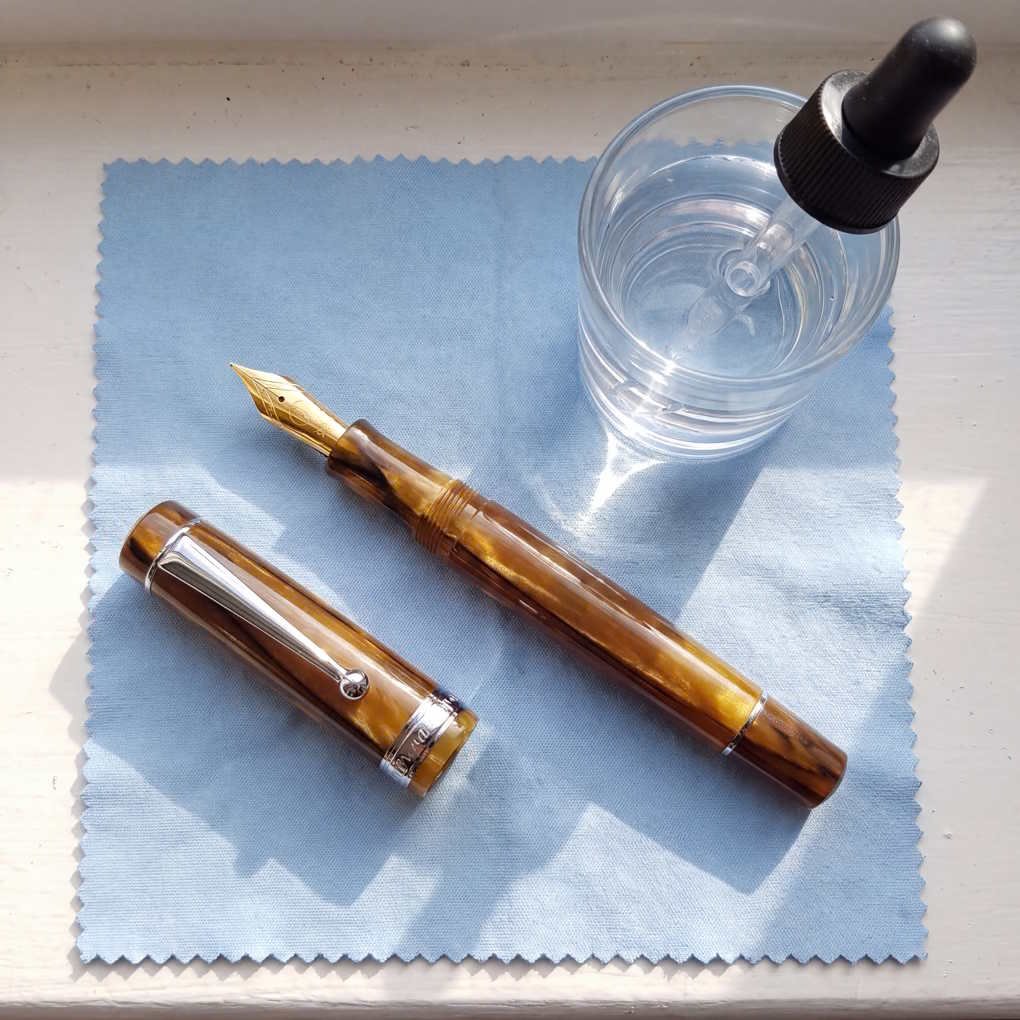
To clean a fountain pen, remove the cartridge or converter, flush the grip section and nib under cool, clean running water until the water runs clear, then let the components air-dry overnight on a paper towel.
Maintenance is straightforward. First, remove remaining ink. Next, flush the section and nib with clean water. You can use a bulb syringe to force water through the feed. Repeat until the water runs reasonably clear. Finally, allow components to dry thoroughly. Once dry, reassemble and refill.
Cleaning may be especially useful when you are changing ink colors. Furthermore, clean it if the pen begins skipping, if the ink flow becomes poor, or if the pen is stored unused for an extended period.
Frequently Asked Questions About Using Fountain Pens
Do You Have to Press Down When Using a Fountain Pen?
No, you do not have to press down. Very little pressure should normally be required. The pen uses capillary action to pull ink down, allowing it to glide smoothly under its own weight.
What Angle Should You Hold a Fountain Pen?
There is no single mandatory angle, but approximately 40–55° is often a comfortable starting range. The goal is to keep the nib flat against the paper so both tines make even contact.
Can Beginners Use Fountain Pens?
Yes, absolutely. Cartridge-based fountain pens are particularly straightforward for new users. They require no special filling techniques, making the transition from ballpoints simple and highly enjoyable.
Why Is My New Fountain Pen Not Writing?
There are several possible causes. The ink hasn’t reached the feed yet, or the cartridge isn’t fully punctured. The converter isn’t properly attached. Alternatively, dried ink or manufacturing residue interferes with flow, or the nib isn’t positioned correctly on the paper.
Can You Use Any Ink in a Fountain Pen?
No, you cannot use any ink. Fountain pen ink is water-based and safe for delicate feeds. India inks, calligraphy inks, and acrylics contain shellac or pigments that will permanently clog the internal mechanism.
Do Fountain Pens Need Special Paper?
Not necessarily, but smoother, less absorbent paper often yields better results. High-quality paper prevents feathering (ink spreading) and bleed-through (ink soaking through to the other side), giving you a much crisper line.
Learning How to Use a Fountain Pen
Learning how to use a fountain pen opens up a world of beautiful, comfortable handwriting. The entire process follows a simple, logical flow: open the cap, fill the ink, assemble the parts securely, hold it at the correct angle, write with incredibly light pressure, and finally, clean and store it properly.
Once you become accustomed to the proper nib angle and the much lighter writing pressure, using a fountain pen becomes completely straightforward. Embrace the learning curve. Soon, knowing how to use fountain pens will feel like second nature, and you will confidently know exactly how to properly use a fountain pen for all your writing needs.