
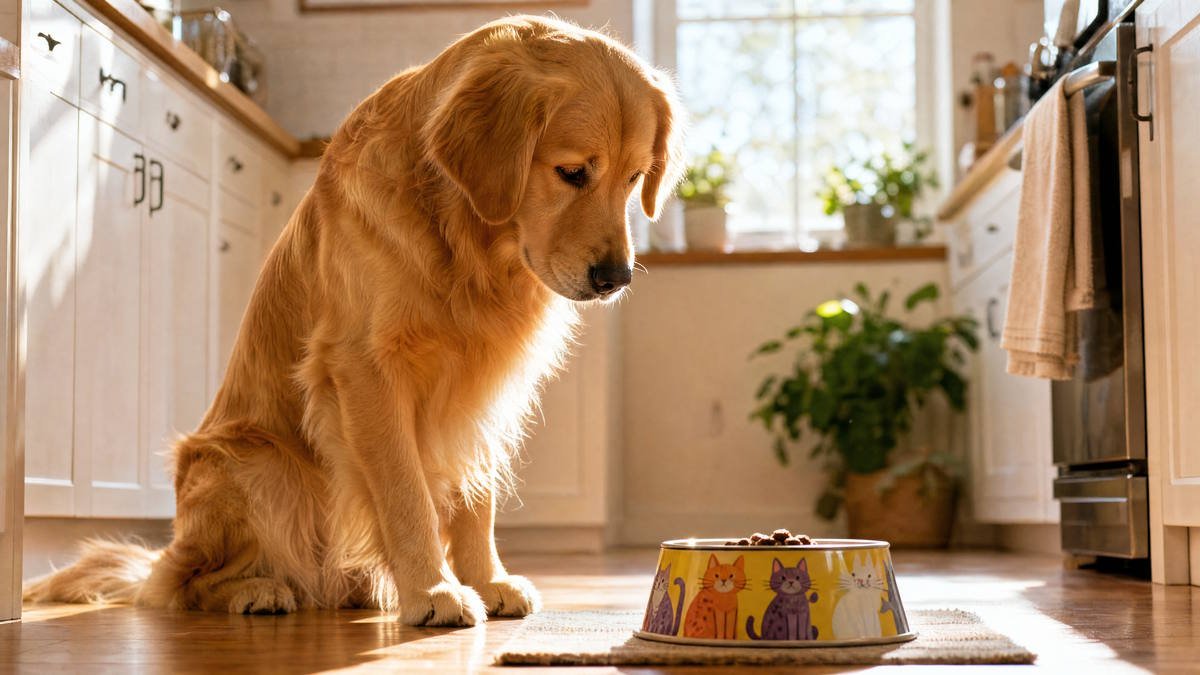
If you share your home with both dogs and cats, you have probably caught your curious pup sneaking over to the cat’s bowl for a quick snack. It leads every pet owner to ask: Can dogs eat cat food, or is cat food bad for dogs? The short answer is that while an occasional bite of cat food is generally safe for most healthy dogs, cat food is not suitable for a dog’s daily diet.
Cats and dogs have completely different dietary needs, so their commercial foods are formulated with distinct nutritional profiles. While a tiny stolen meal won’t poison your pup, regular consumption can lead to stomach upset, weight gain, or long-term health complications.
In this comprehensive guide, we will explore whether cat food is safe for dogs, break down the key differences between feline and canine nutrition, outline what symptoms to monitor, and share simple, practical ways to stop your dog from raiding the cat bowl.
Is Cat Food Safe for Dogs?
Yes, cat food is technically safe for dogs in very small, accidental amounts, but it is not safe as a regular diet. A few stolen kibbles usually cause no harm, but long-term feeding can lead to severe digestive issues, obesity, and pancreatitis due to excessive fat and protein content.
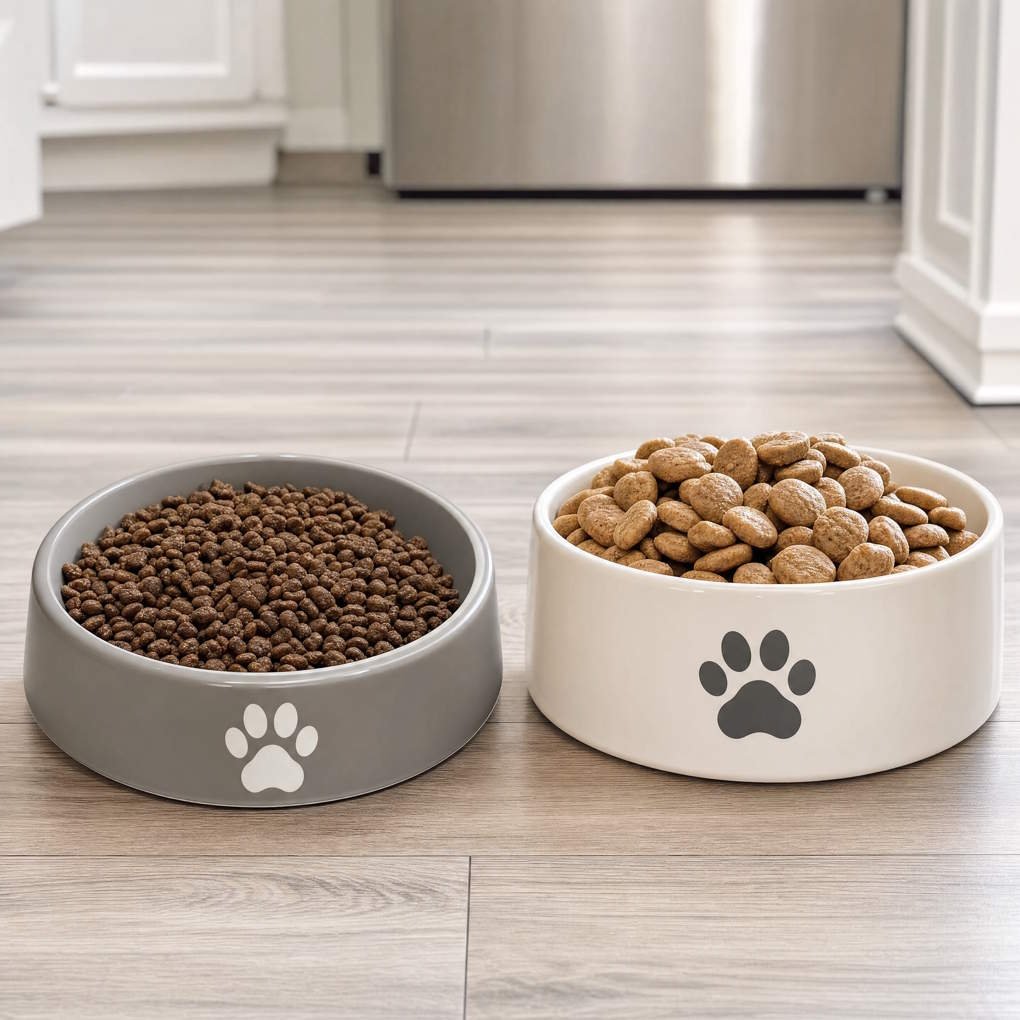
Is It OK for Dogs to Eat Cat Food Occasionally?
For most healthy adult dogs, eating a few bites of cat food once in a blue moon is perfectly fine. If your pup sneaks a crunch from the cat’s bowl while you turn your back, there is usually no cause for alarm.
However, there is a big difference between accidentally snacking and making cat food a regular meal routine. The exact level of risk depends heavily on your dog’s size, age, and individual health history. A tiny dog with a sensitive stomach might feel unwell after a small portion, whereas a large breed might digest it without a single hiccup.
Is Cat Food Poisonous to Dogs?
To set your mind at ease, standard commercial cat food is not inherently poisonous or toxic to dogs. It contains ingredients like meat, grains, vitamins, and minerals that dogs can process.
However, being non-toxic does not mean it is nutritionally appropriate. Furthermore, special circumstances can introduce real danger, such as if the cat food was left out long enough to spoil, or if it contained pet medications or supplements mixed into the bowl for your cat.
Cat Food vs. Dog Food: What’s the Difference?
Different Nutritional Needs of Cats and Dogs
The foundational difference between cat food and dog food comes down to biology. Cats are obligate carnivores, meaning their bodies strictly require meat-based proteins and specialized nutrients like taurine to survive.
Dogs, on the other hand, are omnivores. Canine diets require a balanced mix of proteins, healthy grains, and vegetables to thrive. Because of these distinct biological demands, pet food manufacturers design species-specific formulas to ensure every pet gets the exact balance they need.
Why Cat Food Is Often Richer Than Dog Food
Because cats require significantly higher levels of dietary protein and fat, cat food is naturally far richer and more calorie-dense than dog food. It is also packed with extra flavor enhancers and meat aromas to entice picky felines.
This rich flavor profile is precisely why cat food is so irresistible to dogs. To your pup’s nose, the cat’s bowl smells like a gourmet feast.
Why Dog Food Is Better for a Dog’s Everyday Diet
Complete and balanced dog food provides the right blend of fiber, vitamins, and minerals required to keep canine organs, bones, and digestive systems healthy. Moreover, dog food formulations account for key life stages, ensuring growing puppies, active adults, and aging seniors receive tailored nutrition that cat food simply cannot provide.
What Happens When Dogs Eat Cat Food?
What Happens If a Dog Eats a Small Amount of Cat Food?
When a dog eats a small amount of cat food, most owners notice no symptoms at all. Your pup’s system will likely process the extra protein without an issue. However, dogs with sensitive stomachs may experience mild digestive upset, such as temporary gas, slight nausea, or loose stools.
What Happens If a Dog Eats a Lot of Cat Food?
If your dog manages to gorge on an entire dish or bag of cat food, the high-fat, high-calorie load can shock their digestive system. This frequently leads to noticeable gastrointestinal distress, including acute vomiting and diarrhea. In severe cases, high fat intake can trigger pancreatitis, a painful inflammation of the pancreas that requires immediate veterinary care.
What Happens If a Dog Regularly Eats Cat Food?
When dogs consume cat food regularly over weeks or months, serious nutritional imbalances occur. The excessive calories and fats quickly lead to weight gain and obesity, putting undue stress on canine joints and organs. Furthermore, long-term feeding can overload a dog’s kidneys and liver due to the unnaturally high protein intake.
What If My Dog Ate Cat Food?
What to Do After Your Dog Steals Cat Food
If you discover that your dog ate cat food, stay calm and take a few quick steps:
- Estimate the quantity consumed to determine whether it was a quick bite or a huge feast.
- Inspect the cat food bowl or package to confirm no toxic additives, wrappers, or medications were ingested.
- Provide clean, fresh water so your dog stays hydrated.
- Monitor your pup over the next 24 to 48 hours for any physical discomfort.
Symptoms to Watch For
Keep a close eye on your dog’s behavior and physical condition. Watch specifically for these signs:
- Vomiting or retching
- Diarrhea or unusually loose, greasy stools
- Abdominal pain, bloating, or whining when touched
- Excessive flatulence or gurgling stomach noises
- Sudden loss of appetite
- Lethargy, weakness, or unusual tiredness
When Should You Contact a Veterinarian?
You should call your vet immediately if your dog displays persistent vomiting or diarrhea, severe abdominal discomfort, or extreme lethargy. Additionally, seek medical advice right away if your dog has existing health conditions (such as kidney disease or chronic pancreatitis), if a tiny puppy or senior dog ate a large portion, or if a massive quantity was consumed.
Can I Feed My Dog Cat Food?

Can Cat Food Be Fed to Dogs as a Regular Meal?
No, cat food should never replace a nutritionally complete dog food diet. Feeding cat food routinely deprives your dog of essential dietary fiber and omnivore balance while overloading them with excess protein and fat.
Can I Give My Dog Cat Food in an Emergency?
If you run out of dog food late at night, offering a tiny portion of cat food as a single temporary meal is acceptable in a pinch. However, emergency feeding is vastly different from setting a routine. If you ever need alternative feeding solutions for more than a single day, consult your veterinarian for safe household substitutes, such as plain boiled chicken and rice.
Can My Dog Eat Dry Cat Food?
Dry cat food presents the exact same nutritional concerns as wet cat food—it contains protein and fat levels designed exclusively for felines. Additionally, dry cat kibble is often shaped into smaller, denser pieces that can pose a minor choking hazard for large dogs who gulp their food down without chewing. Avoid using dry cat food as a daily kibble substitute.
Can Dogs Eat Whiskas Cat Food?
While Whiskas is a popular and safe brand for felines, it is formulated specifically to meet feline nutritional standards. An accidental bite of Whiskas will not harm your dog, but it should not be fed to dogs intentionally or habitually. Always choose age-appropriate dog food tailored to your canine’s needs.
Is Cat Food Good for Dogs?
While dogs love the taste of cat food, high palatability does not equal healthy nutrition. Just because your dog craves it doesn’t mean it is good for them! A dog’s primary diet must fulfill canine dietary standards. Unhealthy treats and stolen cat kibble should never displace nutrient-dense, species-appropriate meals.
Why Does My Dog Keep Eating the Cat’s Food?
Understanding why your dog raids the cat bowl makes prevention much easier. Common reasons include:
- Irresistible smell and rich, meaty flavor
- Easy, unsupervised access to open bowls left on the floor
- Natural curiosity and opportunistic scavenging instincts
- Territorial competition between multi-pet households
- Free-feeding schedules that leave cat food out all day long
How to Stop Your Dog From Eating Cat Food
Feed Cats and Dogs in Separate Areas
The easiest fix is physical separation. Feed your cat in a separate room behind a closed door, or use elevated feeding stations such as sturdy countertops, cat trees, or tables where your cat can jump comfortably but your dog cannot reach. Pet gates with small cat doors also work wonders.
Use Scheduled Mealtimes
Avoid leaving cat food out for continuous grazing. Instead, transition your cat to a set feeding schedule. Give your cat 15 to 20 minutes to eat, and promptly pick up any leftover food as soon as they finish.
Consider Microchip or Selective Pet Feeders
Selective pet feeders use microchip sensors or RFID collar tags to open only for your cat. When your dog approaches, the lid stays locked tight, keeping the cat food completely secured.
Train a Reliable ‘Leave It’ Command
Train your dog with positive reinforcement using a firm ‘leave it’ command. Reward your pup with high-value dog treats when they walk away from the cat’s bowl. Never turn food stealing into a game of chase, as this encourages the behavior.
How to Stop Food Aggression in Dogs Towards Cats
Food aggression (or resource guarding) occurs when a dog growls, snaps, or guards bowls aggressively from other pets. If your dog guards the cat’s food, safety is your top priority.
Always feed pets in entirely separate, closed rooms to eliminate tension. Never force cats and dogs to eat near each other or share bowls. Importantly, do not punish a dog for growling; it is an essential warning sign that helps prevent bites. Manage the environment strictly to prevent confrontation, and consult a certified positive-reinforcement behaviorist if aggression escalates.
Frequently Asked Questions About Dogs Eating Cat Food
Can Dogs Eat Cat Food Once?
Yes. A single, small accidental serving of cat food is generally harmless to healthy adult dogs, though mild stomach upset may occur.
Can Dogs Eat Wet Cat Food?
No, wet cat food is high in fat and protein, designed exclusively for cats, and should not replace regular dog meals.
Can Dogs Eat Dry Cat Food?
Dry cat food is not recommended for dogs because it lacks canine-balanced nutrients and can lead to weight gain or digestive issues.
Can You Give Cat Food To Dogs As A Treat?
It is best to avoid using cat food as a treat. Stick to healthy, species-appropriate dog treats instead.
Is Cat Food Dangerous For Puppies?
Yes, cat food can be harmful to puppies. Growing puppies require precise calcium and phosphorus balances for bone growth that cat food does not offer.
Why Does My Dog Prefer Cat Food?
Dogs prefer cat food because it contains higher levels of protein and fat, giving it a meatier aroma and richer taste than standard dog food.
Can Dogs Eat Cat Food?
While an accidental bite of cat food is not toxic and rarely dangerous for healthy dogs, it is harmful when eaten regularly. Dogs require nutritionally balanced diets formulated specifically for canine needs. Always monitor your dog after accidental ingestion, implement feeding-separation strategies, and consult your veterinarian if severe digestive symptoms develop.
One Reply to “Can Dogs Eat Cat Food?”