

Few things match the joy of slicing into a fresh, juicy mango on a warm afternoon. As you enjoy that sweet tropical taste, you might notice a pair of hopeful eyes staring up at you. Your furry best friend wants a bite! But can dogs eat mango, or should you keep this sweet treat entirely to yourself?
Yes, dogs can safely eat small amounts of ripe mango flesh as an occasional treat. However, you must always remove the tough outer skin and the hard central pit first. While mango offers vitamins and hydrating fiber, portion control remains essential for keeping your dog healthy and happy. In this guide, we will explore the benefits, potential risks, and proper ways to share fruit with your pets and family.
Can Dogs Eat Mango?
Yes, healthy dogs can enjoy fresh mango flesh as a delicious snack. Mango is not toxic to dogs, which makes it a safe option when prepared correctly. You must always slice away the skin and remove the inner seed before offering a piece.
Treats like fruit should only complement your dog’s regular daily food. Balanced dog food already provides all the essential nutrition your pet needs every day. Therefore, fruit should remain a fun bonus rather than a staple meal.
Is Mango Safe for Dogs?
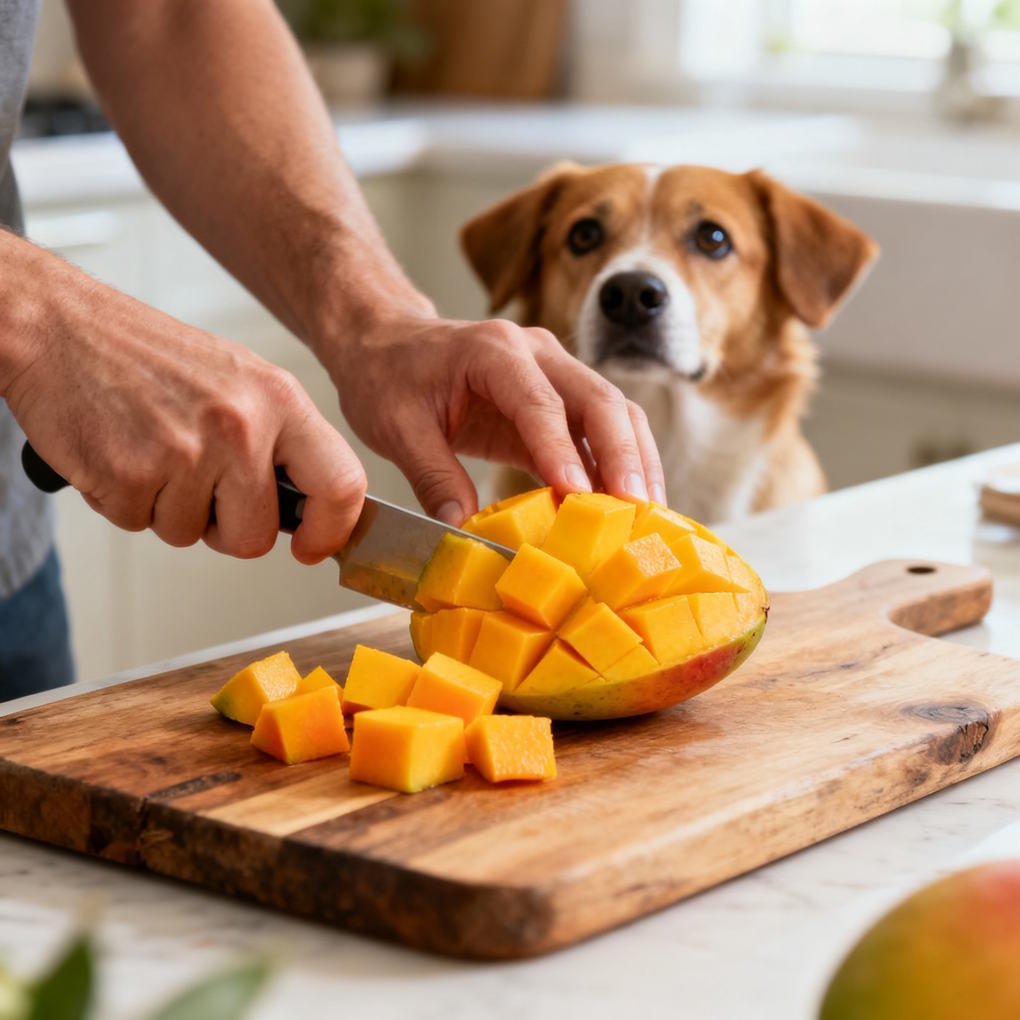
Ripe mango flesh is generally safe for most healthy adult dogs. It provides a soft texture that many dogs find appealing on a hot day. However, only the sweet inner flesh is safe for consumption.
You should never feed your pet the tough peel or the central seed. Additionally, mango contains natural sugars, so moderation is key. Offering too much fruit can lead to unnecessary calories and tummy trouble.
Can Puppies Eat Mango?
Puppies can try small pieces of ripe mango once they eat solid food regularly. Their digestive systems are still developing, so start with tiny bite-sized pieces.
Always observe your puppy closely after trying any new food for the first time. Look out for loose stools or signs of discomfort. If your puppy has a sensitive stomach, ask your veterinarian before introducing fresh fruit.
Health Benefits of Mango for Dogs
Mango contains several essential nutrients that support overall well-being in pets. It offers a naturally sweet flavor alongside beneficial vitamins, minerals, and antioxidants. While your dog gets full nutrition from regular food, a small piece of mango offers a healthy alternative to processed snacks.
Rich in Vitamins and Minerals
Mangoes contain essential vitamins like Vitamin A, Vitamin B6, Vitamin C, and Vitamin E. Vitamin A supports eye health, while Vitamin C boosts the immune system.
On top of that, mangoes provide potassium, which helps maintain proper muscle and nerve function. These nutrients work together to support your dog’s daily vitality.
Contains Dietary Fiber
Dietary fiber plays an important role in promoting smooth, healthy digestion. A small bit of fiber can help regulate bowel movements in dogs.
However, too much fiber at once can have the opposite effect. Excessive amounts can lead to gas, cramping, or loose stools.
Provides Antioxidants
Mangoes derive their bright golden color from beta-carotene, a powerful antioxidant. Antioxidants help protect body cells from natural daily wear and tear.
While mango antioxidants support general health, they are not a cure or medical treatment. Think of them as a wholesome extra boost for your dog’s body.
A Refreshing Fruit Treat
Fresh mango consists mostly of water, making it wonderfully hydrating. Its soft, juicy texture makes it easy for dogs to chew and enjoy.
During warm summer months, a chilled piece of mango offers a fantastic, cooling snack. Your dog will love the sweetness, and you will love giving a wholesome treat.
Potential Risks of Feeding Mango to Dogs
Although mango flesh is safe, improper feeding can lead to health issues. Understanding the potential risks helps you protect your dog when sharing treats.
High Natural Sugar Content
Mangoes contain a relatively high amount of natural sugar compared to other fruits. While natural sugar is fine in small amounts, large servings add unwanted calories.
Over time, frequent sugary snacks can contribute to weight gain and dental issues. Dogs with diabetes or weight management goals should generally avoid high-sugar fruits.
Digestive Problems From Eating Too Much Mango
Introducing any new food too quickly can upset your dog’s digestive system. Eating large quantities of mango often causes loose stools, diarrhea, or vomiting.
To prevent stomach distress, always introduce mango slowly. Start with a single bite and wait to see how your dog reacts over twenty-four hours.
Can Dogs Eat Mango Skin?
No, dogs should not eat mango skin. The peel is tough, stringy, and very difficult for a dog’s digestive tract to break down.
In addition, mango skin contains compounds that can irritate your dog’s mouth or stomach lining. Always peel the fruit completely before serving it to your pet.
Can Dogs Eat Mango Seeds or Pits?
No, dogs must never eat mango seeds or pits. The central pit presents a severe choking hazard, especially for smaller dog breeds.
If swallowed, the large pit can easily get stuck in the stomach or intestines, causing a dangerous blockage. If your dog accidentally swallows a mango pit, contact your veterinarian immediately.
How to Safely Feed Mango to Dogs
Properly preparing mango ensures your dog enjoys a sweet treat without any safety hazards. Following a few simple steps guarantees a fun and worry-free snack time.
Preparing Fresh Mango for Your Dog
- Wash the outside of the mango thoroughly under clean water.
- Peel away the entire outer skin using a knife or peeler.
- Carefully slice the soft flesh away from the large central pit.
- Cut the flesh into small, bite-sized cubes suitable for your dog’s mouth size.
- Offer one small piece first and monitor your dog for any digestive changes.
How Much Mango Can Dogs Eat?
Serving sizes depend on your dog’s overall weight, age, and activity level. As a general rule, treats should never exceed 10% of your dog’s daily caloric intake.
Keep in mind that this 10% allowance includes all treats given throughout the day. For a small dog, one or two small cubes are plenty. Larger dogs can enjoy a few extra pieces without issue.
Different Ways to Serve Mango
Freshly diced mango is the easiest way to offer this fruit. You can also mash fresh mango and mix a spoonful into your dog’s food.
For a refreshing treat on warm days, freeze small mango cubes in plain water or dog-safe bone broth. Frozen treats keep dogs entertained while helping them stay cool.
Can Dogs Eat Unripe Mango?
Unripe or green mangoes have a firm texture and a very tart, sour taste. While plain unripe mango flesh is not inherently poisonous, its high acidity can irritate your dog’s stomach.
Furthermore, hard green mango is difficult to chew and digest properly. It is always best to wait until the fruit becomes soft and fully ripe before sharing it.
You must never feed your dog green mango dishes prepared for human consumption. These dishes often contain salt, chili powder, shrimp paste, or onions, which can harm dogs.
If your dog sneaks a small piece of plain green mango, monitor them for signs of an upset stomach. Contact your veterinarian if you notice vomiting or severe discomfort.
Can Cats Eat Mango?
Cat owners often wonder if their feline companions can share in tropical fruit treats as well.
Is Mango Safe for Cats?
Cats can eat small pieces of peeled, pit-free ripe mango flesh. However, cats are obligate carnivores, meaning their bodies rely entirely on meat-based nutrition.
Unlike dogs, cats do not derive dietary benefit from eating fruits. While a small bite will not harm them, most cats show little interest in sweet foods anyway.
How Much Mango Can Cats Eat?
If your cat is curious, limit the portion to a tiny, fingernail-sized piece. Too much fruit can cause upset stomachs or diarrhea in felines.
Cats with diabetes or kidney issues should avoid fruit completely. Always peel the skin and remove the pit entirely before offering a taste.
Can Rabbits Eat Mango?

Rabbits can enjoy tiny pieces of ripe mango as a rare, special treat. However, because rabbits have sensitive digestive systems, extreme moderation is required.
Is Mango Safe for Rabbits?
Healthy adult rabbits can safely consume small amounts of mango flesh. Because mango contains high levels of natural sugars, large portions can disrupt the delicate balance of bacteria in a rabbit’s gut.
Fresh grass hay and clean water must always form the foundation of your rabbit’s daily diet. Fruit should only be an occasional indulgence.
How to Feed Mango to Rabbits
- Remove all skin and the central seed.
- Cut a small piece no larger than a tiny teaspoon.
- Introduce the piece slowly and monitor your rabbit’s droppings over the next day.
- Discontinue feeding if you notice small, soft droppings or changes in appetite.
When Can Babies Have Mango?
Sharing fruit across the whole family is a great way to build healthy habits. Here is what parents need to know about introducing mango to infants.
At What Age Can Babies Eat Mango?
Babies can usually start eating soft ripe mango around six months of age. This aligns with the time most infants start eating solid foods.
Look for signs of developmental readiness, such as good head control and sitting up with minimal support. Always check with your pediatrician before starting new solid foods.
How to Prepare Mango for Babies
Select a soft, completely ripe mango that yields gently to pressure. Peel the outer skin entirely and remove the hard inner pit.
For beginners, blend the soft flesh into a smooth, lump-free puree. As your baby develops better chewing skills, progress to mashed textures and soft, bite-sized cubes. Always supervise your baby closely during mealtimes to prevent choking.
Frequently Asked Questions About Dogs and Mango
Can Dogs Eat Dried Mango?
You should avoid feeding your dog store-bought dried mango. Dried fruit concentrates natural sugars into small bites, making overfeeding very easy. Furthermore, many commercial brands contain added sugars, preservatives, or sulfites that can upset your dog’s stomach.
Can Dogs Eat Frozen Mango?
Yes, frozen mango makes a wonderful summer treat for healthy dogs. Cut the mango into small, manageable pieces before freezing them. Large frozen chunks can present a choking hazard or risk of damaging your dog’s teeth.
Can Dogs Eat Mango Every Day?
It is best not to feed your dog mango every single day. Daily consumption can introduce excessive sugar into your pet’s diet over time. Keep fruit as an occasional reward once or twice a week instead.
What Happens if My Dog Eats a Mango Pit?
A mango pit poses a serious risk of intestinal obstruction or choking. If your dog swallows a pit, call your veterinarian immediately. Do not wait for symptoms like vomiting or lethargy to appear before seeking professional help.
Can Dogs Drink Mango Juice?
No, you should not give your dog store-bought mango juice. Juices lack beneficial fiber and contain highly concentrated sugars. Many commercial juices also contain added flavorings, artificial sweeteners, or preservatives that are harmful to dogs.
Should You Give Mango to Your Dog?
To wrap up, healthy dogs can safely enjoy small portions of ripe mango flesh. It provides a sweet, hydrating snack packed with essential vitamins. Just remember to always remove the tough skin and dangerous central pit beforehand.
Keep portions small to prevent digestive upset and maintain balanced nutrition. If your dog has pre-existing health conditions like diabetes, consult your veterinarian before serving fresh fruit.