

Have you ever shivered through a dive when you should have been admiring the coral? A good wetsuit is one of the most important pieces of scuba-diving equipment you can own. In fact, your comfort underwater directly impacts your air consumption and overall safety.
Finding the best scuba wetsuits depends largely on water temperature, proper fit, diving conditions, and personal cold tolerance. A suit that works beautifully in the Caribbean might leave you freezing in California.
This guide will help you find the best wetsuit for diving in any environment. We will cover the top options for warm, temperate, and cold waters. By the end of this article, you will know exactly how to pick the perfect scuba diving wetsuit for your next adventure.
What Makes a Good Scuba Wetsuit?
A good scuba wetsuit delivers excellent thermal protection, a snug yet comfortable fit, and high flexibility. It should feature high-quality, durable neoprene and strong seams to withstand water pressure and physical abrasion over time.
When you shop for a wetsuit, you should evaluate five critical characteristics. Let’s break down what actually matters.
Thermal Protection
Your wetsuit keeps you warm using a very specific mechanism. High-quality neoprene traps a thin layer of water between your skin and the suit. Your body heat quickly warms this trapped water. This warm layer acts as insulation against the colder ocean water outside.
Comfortable and Secure Fit
A wetsuit must fit snugly to work correctly. A tight fit reduces water circulation inside the suit. If your suit is too loose, cold water will constantly flush through it. This flushing washes away your body heat, defeating the suit’s purpose.
Flexibility
Scuba diving requires a good range of motion. You need flexibility in your shoulders, knees, and hips. Stretching to reach your tank valve or climbing a boat ladder is difficult in stiff neoprene. Super-stretch materials allow you to move freely.
Durability
Diving can be tough on gear. Look for suits with reinforced knees, heavy-duty zippers, and strong seams. Abrasion-resistant materials on high-wear areas will significantly extend the life of your wetsuit.
Easy Entry and Removal
Getting in and out of a wetsuit should not feel like a wrestling match. You will generally find back-zip, front-zip, and zipperless designs. Back-zips are the most common and easiest to slide into, though front-zips offer great water seals.
Best Scuba Wetsuits for Different Types of Diving
Comparing different categories helps you find the exact style you need. While we won’t push specific brands, we have outlined the ultimate archetypes of the best scuba wetsuits available today. Here is what to look for in every major category.
Best Overall Scuba Wetsuit: The Versatile 5mm Full Suit
Thickness: 5mm
Best use: Temperate waters and versatile travel.
Key features: Glued and blind-stitched seams, super-stretch panels, back-zip entry.
Advantages: Balances warmth and flexibility perfectly. Works in a massive variety of global dive sites.
Possible drawbacks: May be slightly too warm for tropical reefs; slightly too thin for deep winter dives.
Recommended type of diver: The all-around recreational diver who travels to varied destinations.
Best Wetsuit for Warm-Water Diving: The 3mm Tropics Cruiser
Thickness: 3mm
Best use: Tropical seas and summer boat diving.
Key features: Flatlock stitching, reinforced knees, lightweight neoprene.
Advantages: Very easy to pack and incredibly easy to put on.
Possible drawbacks: Does not provide enough warmth for multiple deep dives in a single day.
Recommended type of diver: Tropical vacation divers and liveaboard guests.
Best 7mm Scuba Wetsuit: The Cold-Water Warrior
Thickness: 7mm
Best use: Cold water and deep-sea exploration.
Key features: Attached hood options, wrist and ankle seals, thick thermal lining.
Advantages: Offers maximum warmth short of a drysuit.
Possible drawbacks: Can feel bulky and restrict some movement. Requires more weight on your belt.
Recommended type of diver: Local quarry divers or those exploring chilly coastal waters.
Best Scuba Wetsuit for Travel: The 1.5mm Packable Skin
Thickness: 1.5mm to 2mm
Best use: Very warm water, pool training, or as a layering piece.
Key features: Ultra-lightweight, high flex, UV protection.
Advantages: Takes up almost no space in a suitcase and dries rapidly.
Possible drawbacks: Minimal thermal protection; tears more easily on sharp coral.
Recommended type of diver: Frequent flyers heading to the equator.
Best Flexible Scuba Wetsuit: The Super-Stretch 3/2mm
Thickness: 3mm core, 2mm limbs
Best use: Active warm-water diving requiring high mobility.
Key features: Variable-thickness design, zipperless or chest-zip entry, elite-stretch neoprene.
Advantages: Feels like a second skin with zero restriction.
Possible drawbacks: High-stretch neoprene can sometimes compress faster over the years of heavy use.
Recommended type of diver: Photographers and divemasters who need maximum agility.
How Thick Should a Scuba Wetsuit Be?
Wetsuit thickness dictates warmth. It is primarily determined by water temperature, though individual cold tolerance matters. Wetsuit thickness is normally expressed in millimeters (mm).
1mm–2mm Wetsuits
These are ideal for tropical and very warm water, typically above 80°F (27°C). They protect against sunburn and stingers while offering a light thermal barrier.
3mm Wetsuits
A 3mm suit is the standard for warm-water and tropical diving (75°F to 80°F). It offers great mobility while keeping you comfortable on standard one-hour dives.
5mm Wetsuits
This thickness is perfect for temperate or moderately cool water (65°F to 75°F). Many divers consider a 5mm suit to be the most versatile for global travel.
7mm Wetsuits
Choose a 7mm suit for colder-water diving (50°F to 65°F). These thick suits are heavily insulated and often feature built-in seals.
Keep in mind that local conditions change what thickness is appropriate. Depth, dive duration, repetitive dives, and your personal cold tolerance all play a role. If you get cold easily, always size up in thickness. You can also add accessories such as hoods, gloves, boots, and neoprene vests to boost warmth.
How to Choose the Best Wetsuit for Scuba Diving
Choosing the best scuba wetsuit involves evaluating your personal diving habits. You need a suit that aligns with where and how often you dive.
Consider the Water Temperature
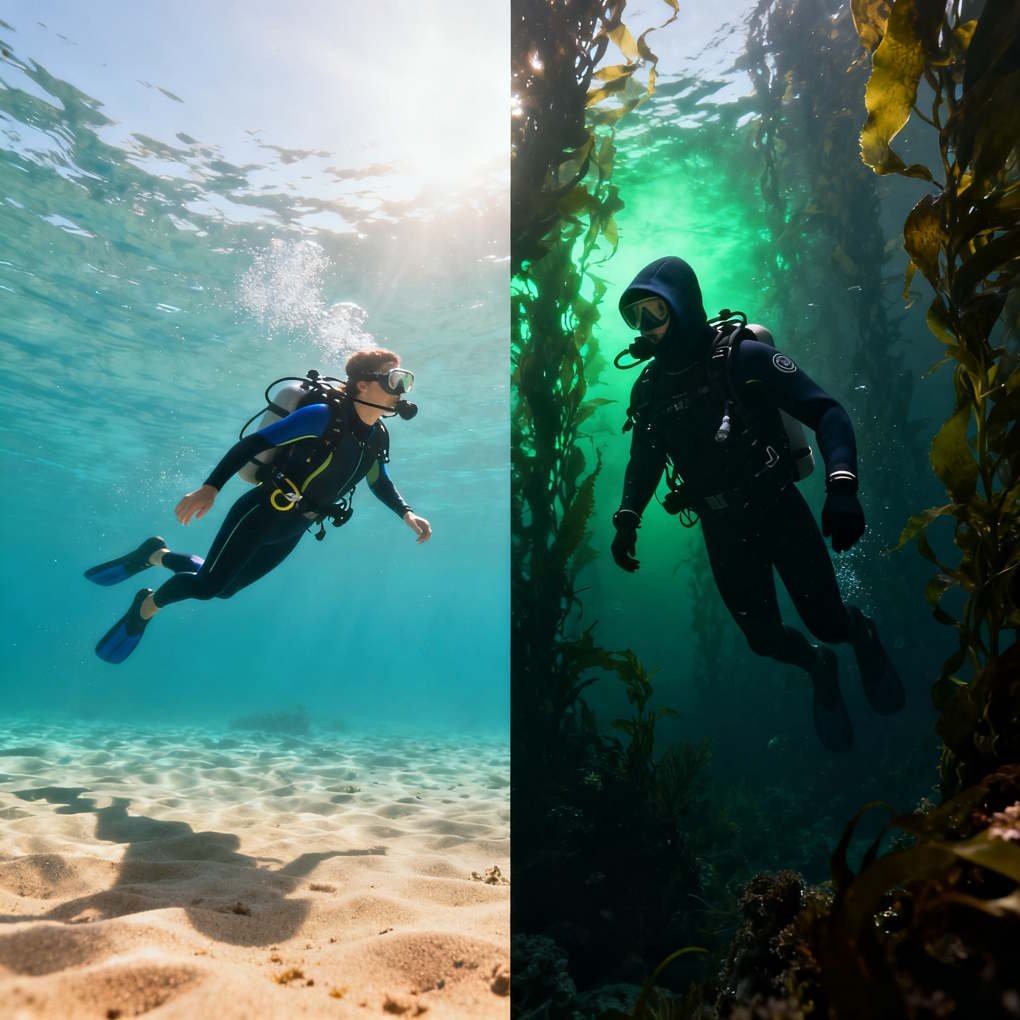
Always make water temperature the starting point when choosing thickness. A suit that is too thin will ruin your dive, while an overly thick suit might cause overheating on the surface.
Choose the Correct Fit
Your wetsuit should be snug without restricting breathing or movement. Pay close attention to common problem areas. The neck, wrists, ankles, lower back, and underarms often harbor hidden air pockets. Ensure these areas sit flush against your skin.
Look at the Neoprene Quality
Not all neoprene is created equal. Higher-end materials offer superior flexibility, stretch, durability, and comfort. Cheaper neoprene might feel stiff and compress permanently after just a few deep dives.
Check the Seams
Seam construction dictates how much water enters the suit. Flatlock seams are breathable but let water in, making them good for warm water. Glued-and-blind-stitched (GBS) seams are watertight and much warmer. Sealed or taped seams add an extra layer of durability and waterproofing.
Consider the Zipper System
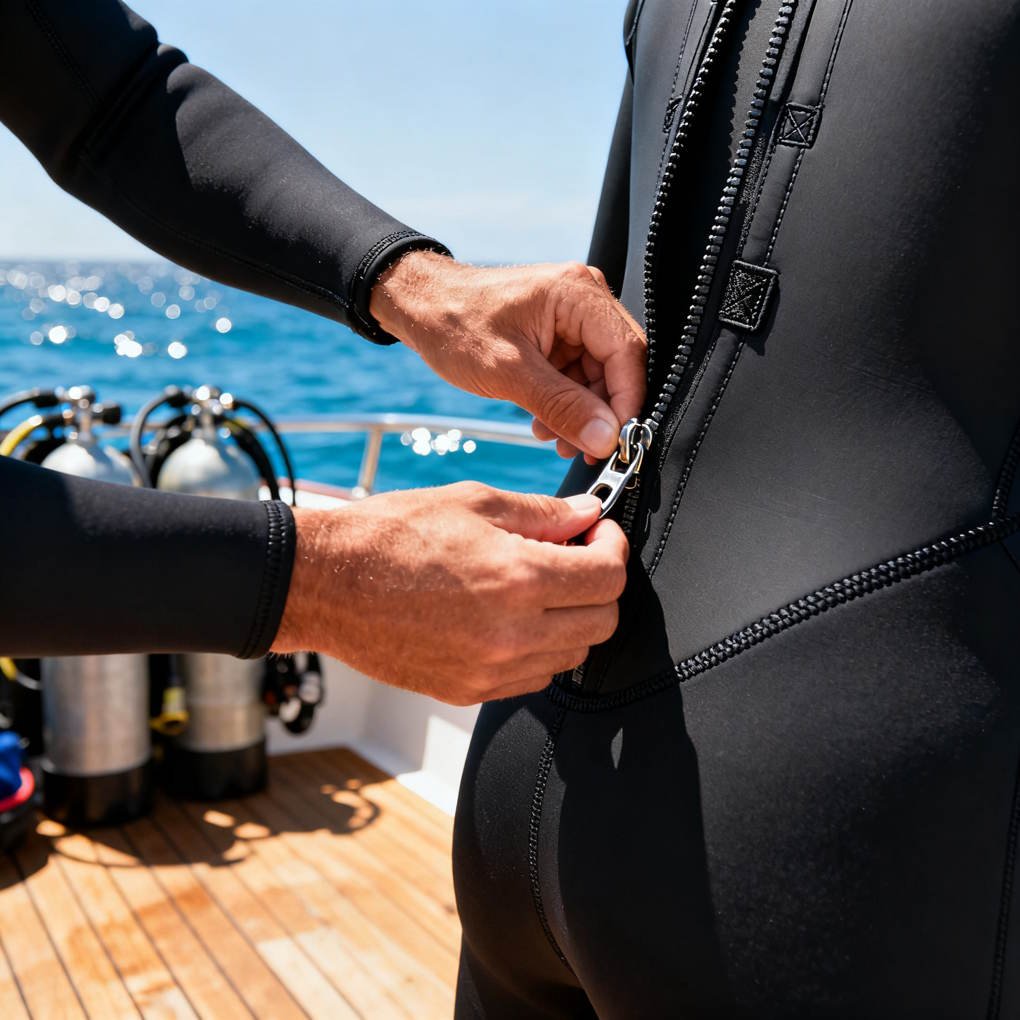
Back-zip suits are easy to put on but may allow a cold trickle of water down your spine. Chest/front-zip models seal better but require more effort to enter. Zipperless suits offer the best flexibility but are the hardest to don.
Consider Your Diving Frequency
An occasional recreational diver can easily get away with a budget-friendly suit. However, a frequent or professional diver should invest in premium materials to survive daily wear and tear.
Full Wetsuit vs Shorty Wetsuit for Scuba Diving
A shorty wetsuit covers your torso, upper arms, and thighs, while a full wetsuit covers you completely to the wrists and ankles. Which one should you choose?
When it comes to thermal protection, full suits trap significantly more heat. Even in warm water, your body loses heat 25 times faster than in air. A full suit slows this process much more effectively.
Furthermore, full suits offer vital protection from environmental hazards. They shield you from sun exposure, accidental coral scrapes, jellyfish stings, and minor abrasions. A shorty may be sufficient for shallow, casual reef dives in extremely hot water. However, many scuba divers prefer a full wetsuit even in relatively warm water just for the added physical protection.
Scuba Wetsuit vs Surfing Wetsuit: What’s the Difference?
While both types of suits use neoprene, they are designed for very different activities. Scuba suits must withstand compression at depth, whereas surfing suits prioritize surface flexibility.
When you descend, water pressure compresses your suit. Scuba wetsuits use denser neoprene to maintain thermal performance under pressure. Surfing wetsuits use highly aerated neoprene that compresses easily, meaning they lose their warmth when taken deep.
Additionally, scuba suits feature tougher seam construction and durability upgrades to handle heavy gear. A purpose-built diving wetsuit is generally preferable for frequent scuba diving, as a surfing suit will compress and wear out rapidly underwater.
How Should a Scuba Wetsuit Fit?
Your wetsuit should feel completely snug against the body. You want to avoid large pockets of loose material, especially in the armpits or lower back. Loose areas allow cold water to pool and circulate.
Your neck, wrist, and ankle seals should sit properly and lie flat. At the same time, the suit should not restrict your breathing in any way. Your arms and shoulders should have adequate mobility to reach your gear.
It is vital to know the difference between a wetsuit that is simply tight and one that is actually too small. A properly tight suit will loosen slightly once wet. A suit that is too small will painfully pull down on your shoulders or constrict your airway.
How to Put On a Scuba Wetsuit More Easily
Putting on a wetsuit can be exhausting. Start from the ankles and gradually work the material upward. Position your knees correctly into the knee pads before pulling the wetsuit higher up your legs.
Avoid aggressively pulling thin neoprene with your fingernails, as it can easily cause crescent-shaped tears. If you struggle to slide in, use a wetsuit changing mat to keep your feet clean, or apply an appropriate wetsuit lubricant (such as diluted hair conditioner or specialized gels).
Finally, adjust the torso and shoulders properly before closing the zipper. Ensure the internal zipper flap is flat against your spine.
How to Care for a Scuba Wetsuit
Proper maintenance drastically extends the life of your gear. Always rinse your suit thoroughly with fresh water after diving to remove salt crystals and sand. Occasionally, wash it using a dedicated, wetsuit-safe cleaner to eliminate odors and bacteria.
Allow it to dry naturally in a breezy area, completely away from direct sunlight. UV rays destroy neoprene quickly. Remember to dry both sides; flip it inside out first, then reverse it.
When hanging, use a wide wetsuit hanger to prevent shoulder stretching. Avoid storing the suit compressed under heavy gear or folded tightly for long periods. Finally, check your zippers and seams periodically for wear.
How Long Do Scuba Wetsuits Last?
The lifespan of a wetsuit depends on several factors. The frequency of diving, neoprene quality, sun and chlorine exposure, and proper cleaning all dictate how long your suit survives.
A heavily used suit might last one to two years, while a well-cared-for vacation suit can last five to ten years. You should watch for common signs that replacement is needed.
Look for permanently compressed neoprene that has become thin and stiff. Pay attention to torn seams, damaged zippers, or poor fit caused by stretching. Most importantly, if you notice a significant reduction in warmth on your dives, it is time for a new suit.
Frequently Asked Questions About Scuba Wetsuits
Here are some of the most common questions divers ask when shopping for gear.
What Is The Best Wetsuit Thickness For Scuba Diving?
The best thickness depends entirely on water temperature. Use 3mm for tropical waters, 5mm for temperate waters, and 7mm for cold waters.
Is A 3mm Wetsuit Enough For Scuba Diving?
Yes, a 3mm suit is perfect for tropical scuba diving in waters roughly 75°F (24°C) and above. However, if you are doing multiple dives a day, you may still get chilled.
Is A 5mm Wetsuit Good For Scuba Diving?
A 5mm is excellent for temperate waters between 65°F and 75°F. Many divers find it to be the most versatile thickness for varying global conditions.
When Should I Wear A 7mm Wetsuit?
You should wear a 7mm suit in cold-water conditions ranging from 50°F to 65°F (10°C to 18°C), such as in California, the UK, or early spring quarry diving.
Should A Scuba Wetsuit Be Very Tight?
It should be comfortably snug to restrict water flow, but it should never restrict your breathing, cause pain, or drastically limit your mobility.
Can I Use A Surfing Wetsuit For Scuba Diving?
You can, but it is not recommended. Surfing wetsuits compress easily at depth, losing their thermal protection. Scuba suits use denser, compression-resistant neoprene.
Do You Wear Anything Underneath A Scuba Wetsuit?
Most divers wear a standard swimsuit, a dive skin, or a rash guard underneath to prevent chafing and make it easier to slide into the suit.
Do I Need A Wetsuit For Tropical Scuba Diving?
While not strictly required for warmth in very hot water, a thin wetsuit (1-3mm) is highly recommended for protection against jellyfish stings, sunburn, and accidental scrapes on the reef.
Are Expensive Wetsuits Worth It?
Generally, yes. Expensive suits feature high-stretch neoprene, superior seam sealing, and better durability. They fit better, last longer, and keep you noticeably warmer.
How Often Should I Replace My Scuba Wetsuit?
Replace it when the neoprene remains permanently stiff or compressed, when seams fail, or when you find yourself getting unusually cold on dives that previously felt comfortable.
What Is the Best Scuba Wetsuit?
Ultimately, there is no single best scuba wetsuit for every diver in the world. The ocean is simply too diverse. You should always choose based on water temperature first, followed closely by proper fit, thickness, flexibility, and construction quality.
To summarize your options: pack a 3mm suit for most warm-water vacation dives. Grab a 5mm suit for cooler, temperate conditions where versatility is key. Rely on a 7mm suit or additional thermal layers for colder-water environments.
Explore our range of scuba wetsuits and find the right thickness, fit, and style for your next dive. Stay warm, dive safe, and enjoy the water!